
Best months
Per-day budget
₹1,950–3,650/day
Getting there
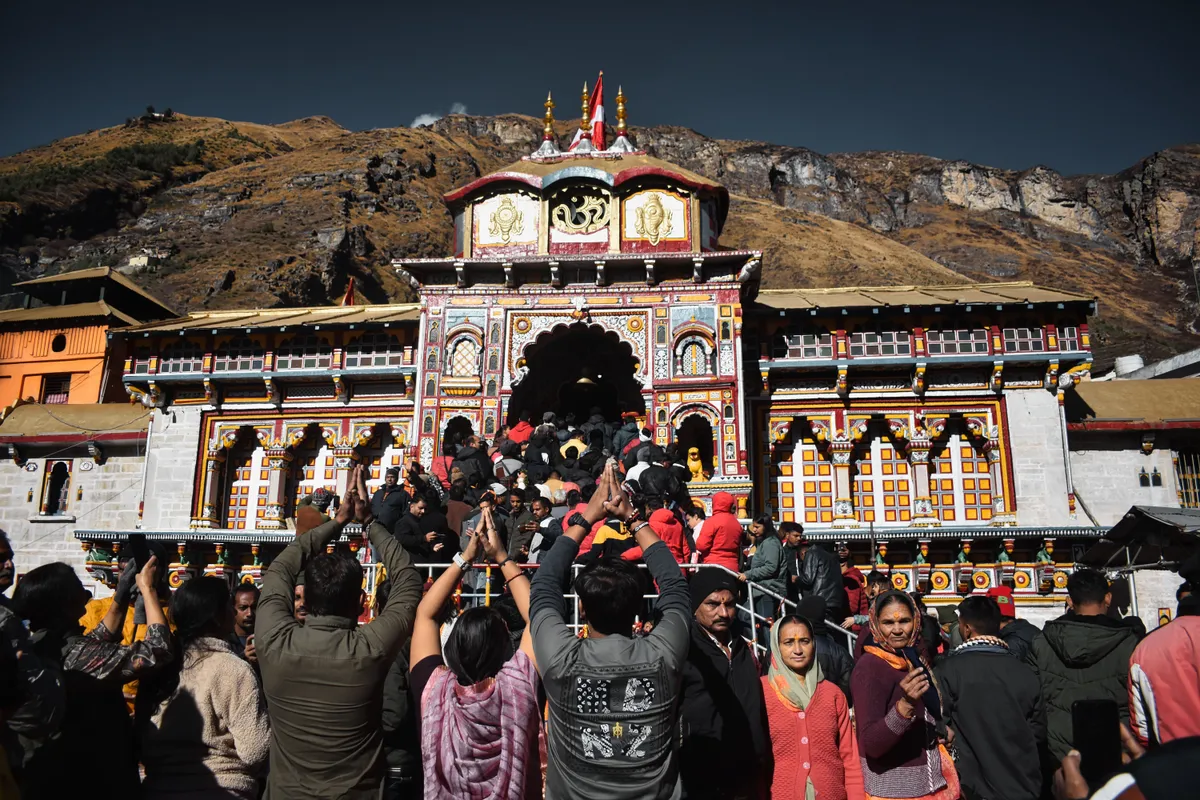
Badrinath is a temple town in the Chamoli district of Uttarakhand, set at 3,300 m in the Garhwal Himalayas on the banks of the Alaknanda River. It is one of the four Char Dham sites and one of the 108 Divya Desams in Vaishnavism. The Badrinath temple is dedicated to Lord Vishnu in his Badrinarayan form and is believed to have been established by Adi Shankaracharya in the 8th century. The town is smaller than Kedarnath and more developed, with a wider range of accommodation and facilities. The setting is dramatic — the temple sits between the Nar and Narayana mountain ranges with the Alaknanda River flowing past. It is a great destination for student backpackers looking for an affordable trip. The area is well-connected to major Indian cities by road, rail and air.
Plan your trip to Badrinath Travel Guide — Char Dham Temple on a Budget
Search and compare prices — we earn a small commission at no extra cost to you.
Flights
Hotels & Hostels
Trains
Search train routes, schedules and fares across India.
Buses
Compare bus operators, schedules and prices.
Why go
The Badrinath temple is the centrepiece. The temple has a black stone idol of Badrinarayan in a meditation posture, flanked by the deities of Kuber, Garuda and Narada. The temple opens for six months each year (May-November) and the winter deity is moved to the Pandukeshwar temple near Joshimath. The Tapt Kund hot spring in front of the temple is believed to have medicinal properties — pilgrims bathe here before entering the temple. The Brahma Kapal ghat on the Alaknanda is a site where pilgrims perform rituals for their ancestors. The Narasimha temple and the Charanpaduka (a rock with the footprints of Vishnu) are within walking distance.
The walk to Mana village, the last village on the India-Tibet border, is 4 km from Badrinath. The village has a small temple dedicated to Vyasa (the author of the Mahabharata) and the Bhim Pul rock bridge. The Vasudhara Falls trek is a 6 km walk from Mana village to a 122 m waterfall at the edge of the valley — the trail offers views of the Chaukhamba and Kamet peaks. The Satopanth Tal trek is a 3-4 day route from Badrinath to a glacial lake at 4,320 m. For a shorter hike, the path to Charanpaduka takes 1 hour.
How to reach
The nearest railway station is Rishikesh, about 315 km from Badrinath. Trains from Delhi to Rishikesh take 5-6 hours (sleeper class ₹250-400). From Rishikesh, buses to Badrinath take about 10-12 hours (₹500-700). UTC buses run daily during the Char Dham season but may have been reduced — check current timings and fares with the Uttarakhand Char Dham registration portal (registrationandtouristcare.uk.gov.in) and UTC (utc.uk.gov.in) before travel. The nearest airport is Dehradun's Jolly Grant airport, about 315 km away. Helicopter services from Dehradun to Badrinath are available during the pilgrimage season. The road to Badrinath passes through Joshimath, which is a good stopover point.
What a day costs
| Dharamshala / budget hotel | ₹300–700 |
| Food (basic meals) | ₹100–250 |
| Local transport (shared taxi) | ₹50–200 |
| Pony to Vasudhara Falls | ₹1,500–2,500 |
When to go
The temple is open from April/May to November. May-June is the busiest season with the largest crowds and longest queues. September-October is the best time — the weather is pleasant, the skies are clear, and the crowds have thinned. July-August is monsoon — rain is frequent and landslides can block the road. October is also good for photography as the first snow of winter covers the surrounding peaks. The temple closes on Diwali and reopens for the summer season on Akshaya Tritiya.
Suggested itinerary
Day 1: Rishikesh to Joshimath
Start from Rishikesh early morning. Bus to Joshimath (8-9 hours). Stay overnight in Joshimath for altitude acclimatization.
Day 2: Joshimath to Badrinath
Bus from Joshimath to Badrinath (3 hours, 1 PM departure recommended to avoid traffic). Check into a hotel or dharamshala. Visit the temple in the evening. Bathe in the Tapt Kund hot spring.
Day 3: Badrinath Darshan and Mana Village
Early morning temple darshan (opens at 5 AM). Walk to Mana village (4 km) after darshan. Visit the Vyasa temple and Bhim Pul. If fit, trek to Vasudhara Falls (6 km from Mana). Return to Badrinath by evening.
Day 4: Return to Rishikesh
Catch the early morning bus from Badrinath to Rishikesh (10-12 hours). Arrive in Rishikesh by evening.
Student hacks
- ▸Break the travel into two days with a stop at Joshimath — the road is long and the altitude gain from Rishikesh to Badrinath is significant.
- ▸Dharamshala beds in Badrinath start at ₹300 — GMVN guesthouses are also affordable.
- ▸The Tapt Kund hot spring is free — carry a towel and take a dip before temple darshan.
- ▸Walk to Mana village — the 4 km road is flat and the village is free to explore.
- ▸Avoid the peak May-June period if possible — September-October has equally good weather and far smaller crowds.
Safety & permits
Indian nationals do not need any permit for Badrinath. The town is at 3,300 m — some visitors may experience mild altitude sickness. The Char Dham route can see severe traffic congestion in May-June. Landslides are common on the Rishikesh-Badrinath road during the monsoon. Carry warm clothing — temperatures can drop to 5°C even in summer. ATMs are available but may run out of cash. Medical facilities are basic — serious conditions require evacuation to Joshimath or Rishikesh. The town is safe for pilgrims of all ages.
FAQs
How do I reach Badrinath from Delhi?
Take a train to Rishikesh (sleeper class ₹250-400), then a bus to Badrinath via Joshimath (10-12 hours, ₹500-700).
When does the Badrinath temple open?
The temple opens in April/May on Akshaya Tritiya and closes around October/November on Diwali.
Is Badrinath safe?
Yes. Badrinath is a well-organized pilgrimage town with a permanent police and administration presence.
Can I do Badrinath and Kedarnath together?
Yes. The Char Dham circuit visits all four sites. Badrinath and Kedarnath are connected via the Rishikesh road but require separate days.
How many days do I need?
Four days minimum — one to reach Joshimath, one to Badrinath, one for darshan and Mana village, one to return.