
Uttarakhand
Gangotri Travel Guide — Ganga Origin Trek on a Budget
Best months
Per-day budget
₹3,400–6,350/day
Getting there
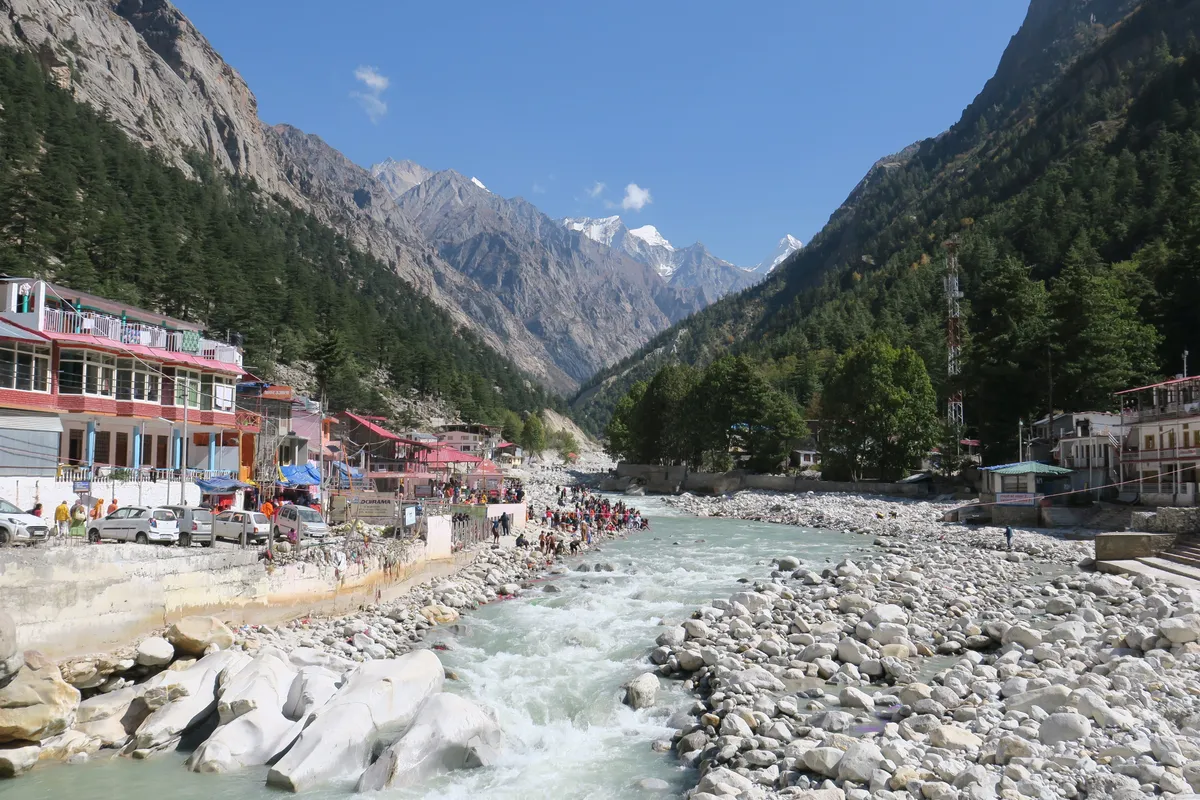
Gangotri is a town and temple in the Uttarkashi district of Uttarakhand, set at 3,100 m on the banks of the Bhagirathi River. It is one of the four Char Dham sites and marks the place where the River Ganga is believed to have descended to Earth. The Gangotri temple, built in the 18th century by the Gorkha commander Amar Singh Thapa, is dedicated to Goddess Ganga. The town is the starting point for the trek to Gaumukh, the actual source of the Ganga at the Gangotri Glacier. Gangotri is smaller and less developed than Badrinath or Kedarnath, with basic accommodation and a single main street. It is a great destination for student backpackers looking for an affordable trip. The area is well-connected to major Indian cities by road, rail and air.
Plan your trip to Gangotri Travel Guide — Ganga Origin Trek on a Budget
Search and compare prices — we earn a small commission at no extra cost to you.
Flights
Hotels & Hostels
Trains
Search train routes, schedules and fares across India.
Buses
Compare bus operators, schedules and prices.
Why go
The Gangotri temple is a simple stone structure on the riverbank with a silver idol of Goddess Ganga. The aarti on the Bhagirathi ghat in the evening is attended by a handful of pilgrims and has a sincere, quiet atmosphere compared to the larger Char Dham sites. The Submerged Shivling, a rock formation in the middle of the Bhagirathi River visible when water levels are low, is a natural Shaivite symbol. The Pandava Gufa cave near the town is where the Pandavas are said to have meditated. The Bhagirathi Shila, a rock near the temple, marks where King Bhagiratha is said to have meditated.
The trek from Gangotri to Gaumukh (the snout of the Gangotri Glacier) is the primary adventure activity — 18 km each way through the Bhagirathi valley with views of the Bhagirathi peaks and the Shivling peak. The trek continues to Tapovan (4 km beyond Gaumukh), a high-altitude meadow at 4,300 m with a direct view of the Shivling peak. For experienced trekkers, the route continues to Nandanvan and the base of the Meru and Bhagirathi peaks. The Kedar Ganga valley trek near Gangotri is a 2-3 day alternative route.
How to reach
The nearest railway station is Rishikesh, about 250 km from Gangotri. Trains from Delhi to Rishikesh take 5-6 hours (sleeper class ₹250-400). From Rishikesh, buses to Gangotri take about 9-10 hours (₹400-600). UTC buses run during the Char Dham season but frequency is limited — check current timings and fares with the Uttarakhand Char Dham registration portal (registrationandtouristcare.uk.gov.in) and UTC (utc.uk.gov.in) before travel. The nearest airport is Dehradun's Jolly Grant airport, about 280 km away. The road to Gangotri passes through Uttarkashi, which is a good overnight stop. The town is small and walkable — everything is within 1 km of the temple.
What a day costs
| Dharamshala / budget hotel | ₹300–600 |
| Food (basic meals) | ₹100–250 |
| Gaumukh trek guide (per day) | ₹1,000–2,000 |
| Pony to Gaumukh (one way) | ₹2,000–3,500 |
When to go
The temple is open from April/May to October/November. The best period for the Gaumukh trek is May-June and September-October. July-August is monsoon — the trail to Gaumukh is slippery and landslides can block the road. October is the clearest time for mountain views but the weather is cold (near freezing at night). The temple closes for winter around Diwali. For the Gaumukh-Tapovan trek, May-June offers the best trail conditions and the most stable weather.
Suggested itinerary
Day 1: Rishikesh to Uttarkashi
Start from Rishikesh early morning. Bus to Uttarkashi (6 hours, ₹250-400). Stay overnight in Uttarkashi. Visit the Vishwanath temple in Uttarkashi in the evening.
Day 2: Uttarkashi to Gangotri
Bus from Uttarkashi to Gangotri (4-5 hours). Check into a dharamshala. Visit the Gangotri temple in the evening and attend the aarti on the ghat.
Day 3: Gaumukh Trek (Day 1)
Start the trek to Gaumukh at 5 AM. The 18 km route follows the Bhagirathi River through the forest. Reach Gaumukh by 1-2 PM. See the glacier snout and return to Gangotri by evening (16 km return is possible in a day if you are very fit).
Day 4: Return to Rishikesh
Catch the early morning bus from Gangotri to Rishikesh (9-10 hours). Arrive in Rishikesh by evening.
Student hacks
- ▸Break the journey at Uttarkashi — the 10-hour direct bus from Rishikesh to Gangotri is exhausting and Uttarkashi is worth a stop.
- ▸The Gaumukh trek can be done in a long day (36 km round trip) if you are fit — start at 4 AM and you will be back by 6 PM.
- ▸Carry a reusable water bottle — the Bhagirathi River water is safe to drink after filtering.
- ▸Forest permit for Gaumukh is ₹200 — get it at the Gangotri checkpoint before starting the trek.
- ▸The best view of Gaumukh is in the early morning when the glacier ice reflects the sun — arrive by 9-10 AM.
Safety & permits
Indian nationals do not need a permit for Gangotri town. The Gaumukh trek requires a Forest Department permit (₹200-300) that can be obtained at the Gangotri checkpoint. The trek to Gaumukh is 18 km each way and involves walking on glacial moraine in the final section — hire a guide if you are not experienced with glacier terrain. Altitude sickness is possible above 4,000 m at Tapovan. The temperature at Gaumukh can drop to freezing even in summer. Carry layers and a tent if you plan to stay overnight near Gaumukh. Mobile coverage is available in Gangotri town but patchy on the trek.
FAQs
How do I reach Gangotri from Delhi?
Take a train to Rishikesh (sleeper class ₹250-400), then a bus to Gangotri via Uttarkashi (9-10 hours, ₹400-600).
How hard is the Gaumukh trek?
Moderate difficulty — 18 km one way on a well-defined trail with limited elevation. The final section is rocky moraine.
Do I need a permit for Gangotri?
Not for the town. The Gaumukh trek requires a Forest Department permit (₹200-300) from the Gangotri checkpoint.
When does the Gangotri temple open?
The temple opens in April/May on Akshaya Tritiya and closes around October/November on Diwali.
How many days do I need?
Four days minimum — one to Uttarkashi, one to Gangotri, one for the Gaumukh trek, one to return.