
Best months
Per-day budget
₹800–1,350/day
Getting there
Gwalior is a historic city in northern Madhya Pradesh, best known for the Gwalior Fort, one of the most impregnable forts in India. The fort has been ruled by the Kachchhapaghata, Tomar, Mughal and Scindia dynasties. The city is also a centre for Indian classical music — the Gwalior gharana is the oldest gharana of Hindustani classical music. Gwalior has the Jai Vilas Palace (a 19th-century Scindia palace with a museum), the Sas Bahu Temple (an 11th-century twin temple with intricate carvings), and the tomb of the Sufi saint Ghous Mohammed. It is a great destination for student backpackers looking for an affordable trip. The area is well-connected to major Indian cities by road, rail and air. The destination offers a mix of experiences that cater to all kinds of travellers, from solo backpackers to small groups.
Plan your trip to Gwalior Travel Guide
Search and compare prices — we earn a small commission at no extra cost to you.
Flights
Hotels & Hostels
Trains
Search train routes, schedules and fares across India.
Buses
Compare bus operators, schedules and prices.
Why go
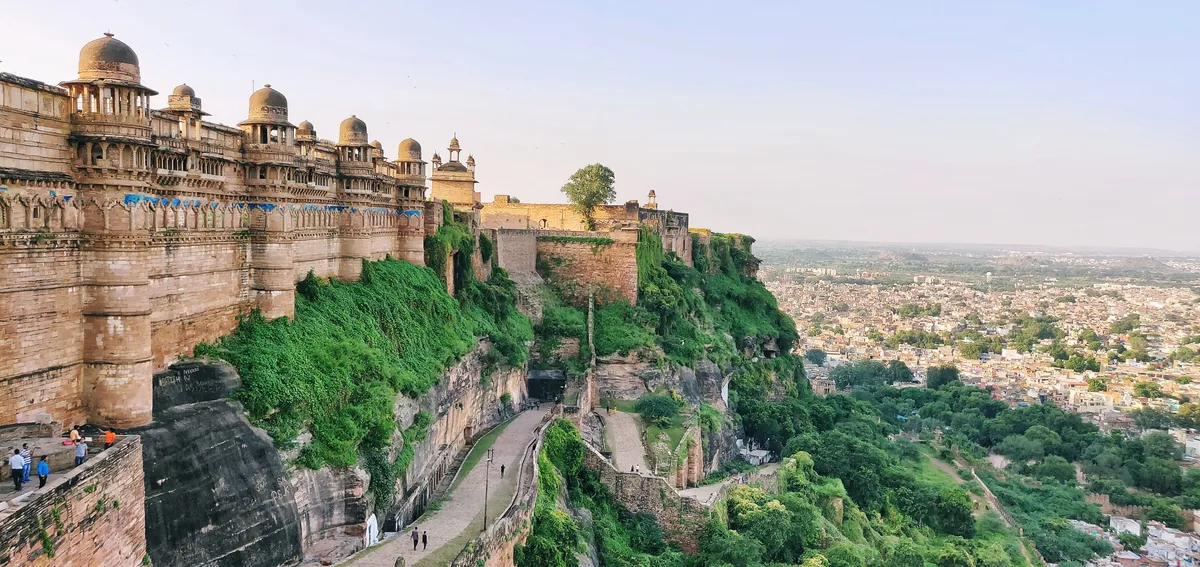
Gwalior Fort covers 3 sq km on a 100 m sandstone hill. The Man Singh Palace inside the fort (built 1486-1516) is the oldest surviving palace in India with blue tile work. The fort has the Saas Bahu Temple (11th century), the Teli Ka Mandir (a 9th-century temple built like a Buddhist chaitya), and the Gujari Mahal (now an archaeological museum with the Yakshini statue). The Jai Vilas Palace has a Durbar Hall with the world's largest chandeliers. Gwalior is the birthplace of the Gwalior gharana. The Tansen Tomb in Gwalior is the burial place of the 16th-century musician. The annual Tansen Music Festival in November-December attracts the best classical musicians in India. The Gwalior government music college is one of the oldest in India.
How to reach
Gwalior has its own railway station with direct trains from Delhi (Shatabdi, 3 hours; sleeper class ₹200-350). The nearest airport is Gwalior, with limited flights — Delhi/Indore airports are alternatives. Buses from Delhi take 5-6 hours.
What a day costs
| Budget hotel | ₹500–800 |
| Food (thali) | ₹150–250 |
| Fort entry (Indians) | ₹50–100 |
| Jai Vilas entry | ₹100–200 |
When to go
October to March is the best period. July-September is monsoon — the fort looks green. April-June is hot (up to 45°C). The Tansen Music Festival in November-December is the cultural highlight.
Suggested itinerary
Day 1: Arrive and Fort
Arrive in Gwalior by Shatabdi from Delhi (3 hours). Visit Gwalior Fort — spend 3-4 hours exploring the palaces, temples and museum. Evening at the Jai Vilas Palace (closes by 5 PM — visit before the fort or the next day).
Day 2: City Tour and Depart
Visit the Tansen Tomb and the adjacent Ghous Mohammed Tomb in the morning. Visit the Gwalior market for local crafts. Catch an evening train back to Delhi.
Student hacks
- ▸Gwalior is only 3 hours from Delhi by Shatabdi — a perfect weekend trip.
- ▸Fort entry is ₹50 for Indians — the small fee includes access to all structures inside.
- ▸The Gujari Mahal museum (inside the fort) has the famous Yakshini statue — included in the fort entry.
- ▸Visit the fort at 4 PM for golden light on the sandstone structures.
- ▸The Tansen Tomb and compound are free — the acoustics are interesting (the tomb is said to amplify sound).
Safety & permits
Indian nationals do not need any permit for Gwalior. The city is safe. The fort is large — wear comfortable walking shoes. ATMs are available everywhere. Mobile coverage is excellent.
FAQs
How do I reach Gwalior from Delhi?
Shatabdi Express from Delhi to Gwalior (3 hours, ₹200-350 sleeper/chair car).
What is Gwalior known for?
Gwalior Fort, Jai Vilas Palace, the Gwalior gharana of classical music, and the Tansen Music Festival.
How many days do I need?
2 days — one for the fort, one for the palace and city.