
TBD · Banjar, Kullu
Jibhi and Tirthan Valley — Quiet Himachal on a Budget
Best months
Per-day budget
₹950–2,450/day
Getting there
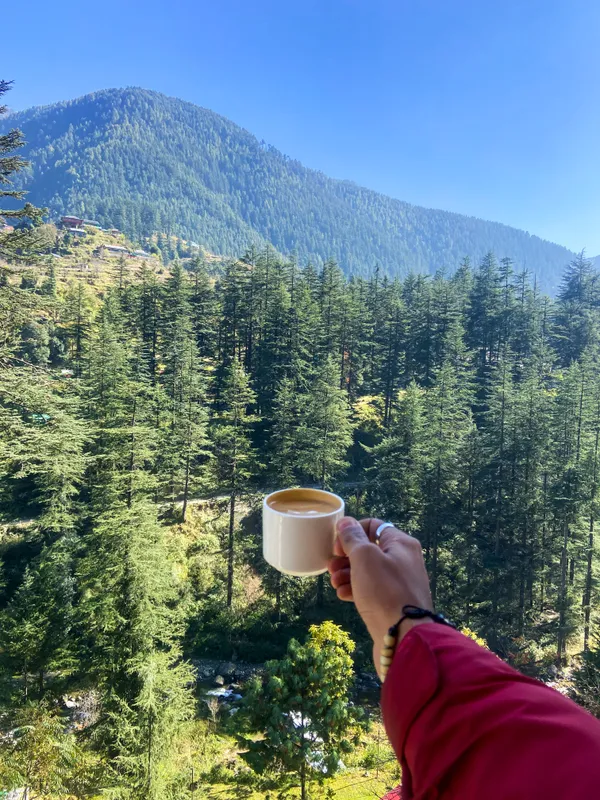
Jibhi is a small village in the Banjar Valley of Himachal Pradesh, often grouped with the nearby Tirthan Valley as one of the quieter alternatives to Kasol and Manali. The valley runs along the Tirthan River, a clear trout stream that flows out of the Great Himalayan National Park. The main village has a handful of wooden cottages, homestays and a small cafe lane by the river. There is no party scene, no crowded markets and no street-lit main road. You come here to switch off completely — to walk through apple orchards, to hike up to the Jalori Pass for views of the Kullu Valley, or to spend a day by the Tirthan with a book. It is also one of the most affordable places to stay in Himachal for a week or more, with weekly homestay rates that work out much cheaper than daily bookings.
Plan your trip to Jibhi and Tirthan Valley — Quiet Himachal on a Budget
Search and compare prices — we earn a small commission at no extra cost to you.
Flights
Hotels & Hostels
Trains
Search train routes, schedules and fares across India.
Buses
Compare bus operators, schedules and prices.
Why go
Jibhi and Tirthan Valley are built for slow travel. The main activity is doing very little — sitting by the river, watching the light change on the hills, and eating simple home-cooked meals at your homestay. The valley has a small but growing set of riverside cafes, most attached to homestays rather than standing alone. Jibhi waterfall is a 15-minute walk from the village centre. The wooden architecture of the cottages — traditional Himachali style with slate roofs and carved balconies — adds to the calm atmosphere. This is the kind of place where you can stay for a week without feeling the need to move.
The main day hike in the area is the Jalori Pass trek from the road head at Jalori Pass to Serolsar Lake. The trail winds through a dense forest of oak and rhododendron and reaches a small lake in about 2-3 hours. The pass itself, accessible by road from Jibhi, offers 360-degree views of the surrounding ranges. The Great Himalayan National Park, a UNESCO World Heritage site, has its Tirthan Valley entrance a short drive away. You can arrange guided walks into the park with local registered guides in the village. Trout fishing in the Tirthan River, with permits available locally, is a unique activity for those interested.
How to reach
The most common route is the overnight HRTC bus from Delhi to Aut, the highway stop for the Banjar Valley. The bus takes about 12 hours and costs ₹700-1,000. From Aut, shared taxis run up the valley to Jibhi in about an hour, costing ₹200-300 per person. Check current timings and fares on the HRTC website or app. Alternatively, take an overnight Volvo bus from Delhi to Manali and get off at Aut, which is 45 minutes before Manali. The nearest railhead is Chandigarh, 270 km away. The nearest airport is Bhuntar (Kullu), about 45 km from Aut, with flights from Delhi under ₹4,000.
What a day costs
| Homestay cottage | ₹500–1,200 |
| Food (home-cooked meals) | ₹250–450 |
| Local transport (shared jeeps) | ₹100–300 |
| Park entry / guide fees | ₹100–500 |
When to go
March to June is the best period for clear weather, open trails and active homestays. July to September brings monsoon — the valley turns lush green but leeches appear on forest trails and the river runs high and muddy. October to November is the autumn window with crisp air and empty trails. December to February is cold and quiet — many homestays close for winter. Snowfall can close the Jalori Pass road from January to March. If you want absolute peace and don't mind the cold, late November to early December is the sweet spot.
Suggested itinerary
Day 1: Arrive and Settle In
Arrive in Aut by overnight bus. Take a shared taxi to Jibhi. Check into a riverside homestay or wooden cottage. Spend the afternoon walking to Jibhi waterfall — a 15-minute easy walk through the village. Have dinner at your homestay — most hosts cook local Himachali food if you ask in advance.
Day 2: Jalori Pass and Serolsar Lake
Take a shared taxi from Jibhi to Jalori Pass (₹200-300 per person, 30 minutes). From the pass, walk the trail to Serolsar Lake — about 2-3 hours one way through oak and rhododendron forest. Carry water and packed lunch. Return to the pass and catch a shared taxi back to Jibhi by late afternoon.
Day 3: Tirthan River and Depart
Walk along the Tirthan River upstream from Jibhi in the morning. The trail follows the river through forest and open meadows. If you have arranged a GHNP guide, this is the time for a half-day forest walk. Pack up in the afternoon and take a shared taxi back to Aut for the overnight bus to Delhi.
Student hacks
- ▸Weekly homestay rates in Jibhi are negotiable — ask for a 6-night deal at roughly 5 times the nightly rate.
- ▸Aut is the highway drop-off point for buses from Delhi — the shared taxi into the valley is cheaper if you wait for it to fill (4 passengers).
- ▸Carry cash from Aut or from Delhi — there are no ATMs in Jibhi or anywhere in the valley.
- ▸Home-cooked meals at your homestay cost less than cafe food and are usually better quality.
- ▸Download offline maps and carry a power bank — electricity can be patchy and network is not reliable.
Safety & permits
Indian nationals do not need any permits for Jibhi, the Tirthan Valley, or the Jalori Pass area. For entry into the Great Himalayan National Park sanctuary zone, a permit and a registered guide are required — these are arranged through the forest check-post near the park entrance on the Tirthan side. Core-zone entry is ₹100 per day for Indians, arranged with a mandatory registered guide at the Shairopa range office; the Tirthan ecozone villages and riverside trails are free and need no permit. The river is safe for wading but not for swimming in the deeper pools. Solo travel is common here but mobile network is limited — Airtel and Jio work in patches, BSNL is the most reliable. Carry cash as there are no ATMs in the valley; withdraw in Aut or before leaving.
FAQs
How do I reach Jibhi from Delhi on a budget?
Take an overnight HRTC bus from Delhi ISBT to Aut (₹700-1,000, 12 hours). From Aut, a shared taxi to Jibhi costs ₹200-300 per person and takes about an hour. Check current timings and fares on the HRTC website or app.
Is Jibhi better than Kasol?
That depends on what you want. Jibhi is quieter, less commercial, and has fewer cafes and people. Kasol has more food options, a stronger traveller scene, and is closer to Manali. Jibhi is for slow, offline days. Kasol is for social days and easy treks.
Do I need a guide for the Serolsar Lake trek?
No. The trail from Jalori Pass to Serolsar Lake is well marked and easy to follow. You can do it independently. For the Great Himalayan National Park trails, a registered guide is mandatory and can be arranged in Jibhi.
What is the best time to visit Jibhi?
March to June for warm weather and green landscapes. September to November for clear skies and fewer people. Avoid July-August unless you are okay with rain and leeches. December-February is very cold and many places close.
Is there mobile network in Jibhi?
Network coverage is patchy. Airtel and Jio work in some spots but not reliably. BSNL is the most consistent network in the valley. Most homestays do not have Wi-Fi. Consider this an offline destination.
Can I do a day trip to the Great Himalayan National Park from Jibhi?
Yes. The park's Tirthan entrance is about 20 minutes by shared taxi from Jibhi. A half-day guided walk into the sanctuary zone is doable. The full-day trek to the higher reaches requires an early start and more planning.