
Uttarakhand
Kedarnath Travel Guide — Jyotirlinga Trek on a Budget
Best months
Per-day budget
₹5,800–9,750/day
Getting there
Kedarnath is a town and temple in the Rudraprayag district of Uttarakhand, set at 3,583 m in the Garhwal Himalayas. It is one of the 12 Jyotirlingas and the most remote of the Char Dham pilgrimage sites. The temple is dedicated to Lord Shiva and is believed to have been built in the 8th century by Adi Shankaracharya, though the current structure dates from later periods. Kedarnath was severely damaged in the 2013 floods but has been rebuilt and remains the most important Saiva pilgrimage destination in North India. The approach is a 22 km trek from Gaurikund or a helicopter ride from Phata. The village has basic accommodation, dharamshalas and food stalls that operate during the pilgrimage season. It is a great destination for student backpackers looking for an affordable trip.
Plan your trip to Kedarnath Travel Guide — Jyotirlinga Trek on a Budget
Search and compare prices — we earn a small commission at no extra cost to you.
Flights
Hotels & Hostels
Trains
Search train routes, schedules and fares across India.
Buses
Compare bus operators, schedules and prices.
Why go
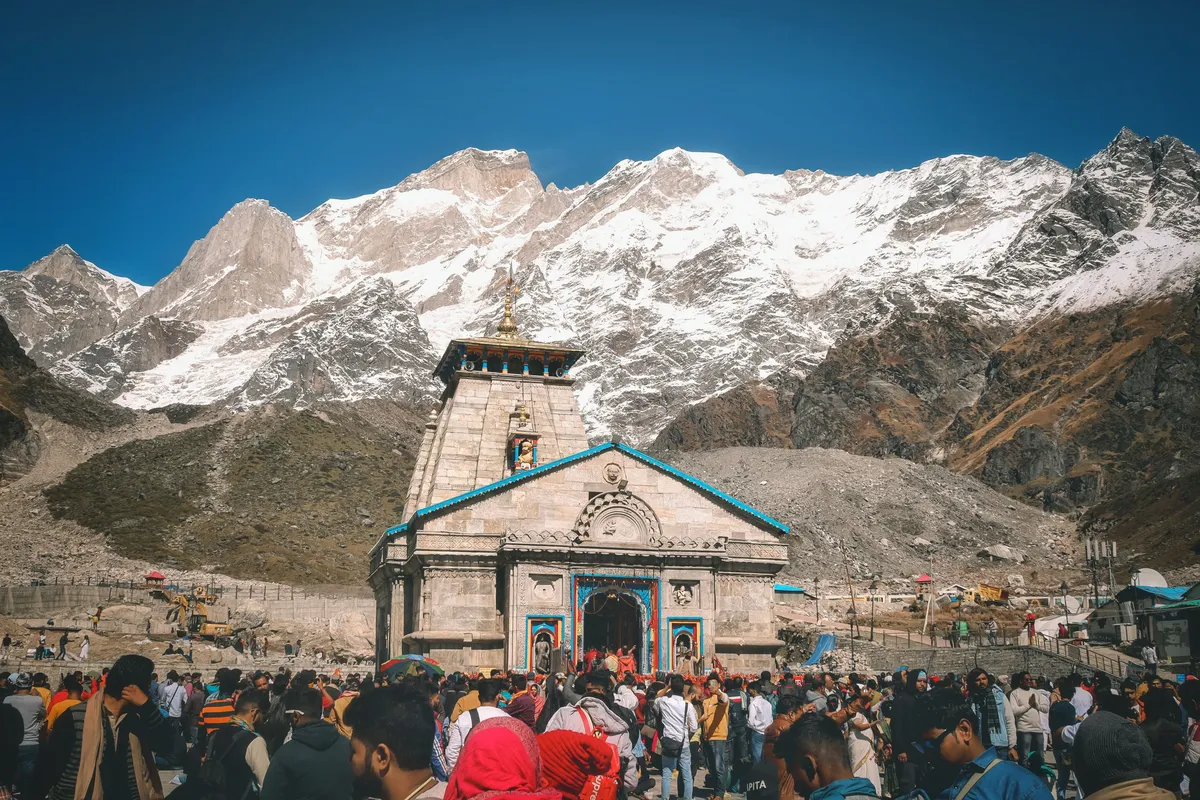
The Kedarnath temple is the primary draw. The stone temple with a conical spire sits against a backdrop of the Kedarnath peak (6,940 m) and the Mandakini River glacier. The temple opens for six months each year (April-November) and the lingam is worshipped with a distinct ritual using bilva leaves and water from the nearby river. The Adi Shankaracharya samadhi behind the temple marks the place where the philosopher died at age 32. The bhasma aarti (evening ritual) is attended by hundreds of pilgrims daily. The mountain setting adds to the spiritual atmosphere — the temple is surrounded by snow-covered peaks and the Mandakini valley.
The Kedarnath trek is a challenging but achievable 22 km walk from Gaurikund to the temple at 3,583 m. The trail passes through Rambara, Garud Chatti and Bhimbali and offers views of the Mandakini valley and surrounding peaks. For experienced trekkers, the Vasuki Tal trek is a 7 km route from Kedarnath to a high-altitude lake at 4,200 m with views of the Chaukhamba range. The Kedarnath trail is well paved with stone steps for most of the route. Ponies and palanquins are available for those who cannot walk the full distance.
How to reach
The nearest railway station is Rishikesh, about 240 km from Gaurikund (the trek start point). Trains from Delhi to Rishikesh take 5-6 hours (sleeper class ₹250-400). From Rishikesh, buses to Gaurikund take about 8-9 hours (₹400-600). Regular UTC buses run during the pilgrimage season but frequency may vary off-season — check current timings and fares with the Uttarakhand Char Dham registration portal (registrationandtouristcare.uk.gov.in) and UTC (utc.uk.gov.in) before travel. The nearest airport is Dehradun's Jolly Grant airport, about 260 km away. Helicopter services from Phata to Kedarnath are available during the pilgrimage season (₹3,000-5,000 per person one way). From Gaurikund, the 22 km trek takes 8-12 hours depending on fitness.
What a day costs
| Dharamshala bed | ₹200–500 |
| Food (basic meals) | ₹100–250 |
| Gaurikund to Kedarnath horse | ₹2,500–4,000 |
| Helicopter one way | ₹3,000–5,000 |
When to go
The temple is open from late April or early May to November. The exact opening and closing dates are determined by the temple committee and are based on the Hindu calendar. May-June is the busiest period with long queues. September-October is the best time — clear skies, fewer pilgrims and comfortable temperatures. July-August is monsoon — the trail is slippery and there is a risk of landslides. The temple closes for winter on Diwali (October-November) and the deity is moved to Ukhimath for worship during the winter months.
Suggested itinerary
Day 1: Rishikesh to Gaurikund
Start from Rishikesh early morning. Bus to Gaurikund (8-9 hours). Arrive by evening. Stay overnight at a dharamshala in Gaurikund.
Day 2: Gaurikund to Kedarnath (Trek Day 1)
Start the trek by 5 AM. The 22 km route passes through Rambara (4 km), Garud Chatti (8 km) and Bhimbali (12 km). Reach Kedarnath by 4-6 PM depending on pace. Check into a dharamshala. Attend the evening aarti at the temple.
Day 3: Kedarnath Darshan and Return
Visit the temple early morning for darshan. Visit the Adi Shankaracharya samadhi behind the temple. Start the downhill trek back to Gaurikund by 10 AM (the downhill takes 5-6 hours). From Gaurikund, catch a bus back to Rishikesh.
Student hacks
- ▸Dharamshala beds in Kedarnath start at ₹200 — the most affordable option. Carry your own sleeping bag for cleanliness.
- ▸Start the trek at 4-5 AM from Gaurikund — the trail is less crowded and the morning light on the mountains is beautiful.
- ▸Carry dry fruits, biscuits and ORS packets — the food stalls on the trail charge premium prices.
- ▸The trek can be done in one day (22 km) by fit trekkers — start early and pace yourself.
- ▸Book the return bus from Gaurikund to Rishikesh in advance — seats fill up fast.
Safety & permits
Indian nationals do not need any permit for Kedarnath. The trek is demanding — it involves climbing from 1,984 m at Gaurikund to 3,583 m at Kedarnath over 22 km. Acclimatization is important — stop for rest and water frequently. The 2013 floods demonstrated the danger of flash floods in the Mandakini valley — check weather conditions before the trek. Medical facilities are available at Gaurikund and basic first aid at Kedarnath. The trail is well marked and has tea stalls every few kilometres. Carry warm clothing — temperatures drop to 5-10°C even in summer.
FAQs
How difficult is the Kedarnath trek?
Moderately difficult — 22 km and 1,600 m of elevation gain. A fit person can do it in 8-10 hours. The trail is well paved.
Do I need a guide for Kedarnath?
No. The trail is well marked and has tea stalls every 2-3 km. Guides are only needed if you want assistance with horses or luggage.
When does the Kedarnath temple open?
The temple opens in late April/May and closes around October/November on Diwali. Check the exact dates online.
Is Kedarnath safe after the 2013 floods?
Yes. The trail and temple have been rebuilt. The government monitors weather conditions and closes the trek during warnings.
How many days do I need?
Three days minimum — one for travel to Gaurikund, one for the trek up and temple visit, one for the trek down and return.