
Khajuraho · Bundelkhand
Khajuraho Travel Guide — Temple Sculptures on a Budget
Best months
Per-day budget
₹740–1,400/day
Getting there
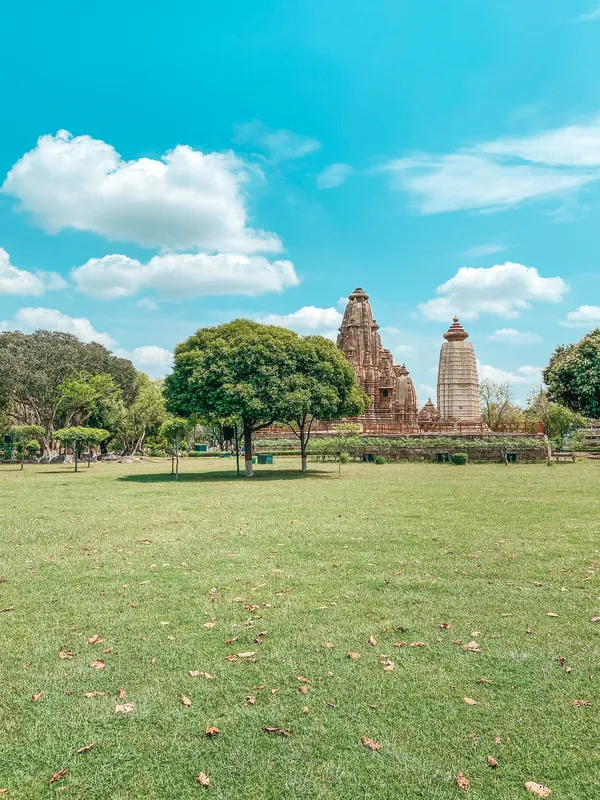
Khajuraho, in the Bundelkhand region of Madhya Pradesh, is famous for its Chandela-era temples covered in intricate stone sculptures. The temples were built between the 9th and 12th centuries and are a UNESCO World Heritage site. The erotic carvings that Khajuraho is most known for make up only a small fraction of the total sculpture — the vast majority of the work depicts dancers, musicians, animals, warriors and everyday life in a medieval Indian kingdom. The temples are divided into three groups, with the Western Group being the most impressive. The town itself is small and relaxed, built almost entirely around the temple economy. A bicycle is the best way to cover the temple groups in a single day, and the sound-and-light show at the Western Group is worth an evening.
Plan your trip to Khajuraho Travel Guide — Temple Sculptures on a Budget
Search and compare prices — we earn a small commission at no extra cost to you.
Flights
Hotels & Hostels
Trains
Search train routes, schedules and fares across India.
Buses
Compare bus operators, schedules and prices.
Why go
The Khajuraho temples represent the peak of Central Indian temple architecture. Each temple sits on a high platform with a clustered superstructure of shikharas rising above the sanctum. The exterior walls are covered in bands of sculpture that wrap around the entire structure — no surface is left blank. The Kandariya Mahadev temple, the largest in the Western Group, has over 870 sculptures on its exterior alone. The sculptures are not just decorative — they follow a specific iconographic programme that moves from worldly life (dancers, couples, hunting scenes) toward the spiritual (deities, celestial beings) as you move from the outer walls toward the sanctum. The museum near the Western Group has a good collection of sculptures removed from collapsed temples.
How to reach
Khajuraho has its own railway station but the connecting trains from major cities are limited. The most common route is to take a train from Delhi to Jhansi (sleeper class ₹300-500, 6-7 hours), and then a bus from Jhansi to Khajuraho (₹150-250, 4-5 hours). Confirm current fares and frequency locally before setting out. Alternatively, take a train to Mahoba or Satna, which are closer to Khajuraho with more frequent bus connections. The nearest airport is Khajuraho itself, with flights from Delhi and Varanasi under ₹5,000. Overnight buses from Delhi to Khajuraho take about 10-12 hours (₹500-800). Once in Khajuraho, the temple groups are all within cycling distance from each other.
What a day costs
| Dorm bed / budget hotel | ₹400–700 |
| Food (thali / cafe) | ₹200–400 |
| Bicycle rental per day | ₹100–200 |
| Western Group entry fee | ₹40–100 |
When to go
October to March is the best time. The weather is pleasant for cycling between the temple groups. November to February is peak tourist season. April to June is very hot (42°C+), making midday cycling uncomfortable. July to September is monsoon — the temples are quieter and the landscape is green, but humidity is high. The Khajuraho Dance Festival in February is a week-long classical dance event held against the temple backdrop, with performances by leading Indian dancers. Raneh Falls, a canyon with deep pools, is best visited after the monsoon (October-November) when the water flow is strongest.
Suggested itinerary
Day 1: Western Group of Temples
Arrive in Khajuraho by afternoon. Check in and rent a bicycle for the duration of your stay. Visit the Western Group of temples — the main cluster with the largest and most elaborate temples. Spend 3-4 hours exploring. Return for a rest and attend the sound-and-light show in the evening (English version at 7:30 PM).
Day 2: Eastern and Southern Groups
Cycle to the Eastern Group of temples in the morning — these are smaller and quieter, located within a short ride. Continue to the Southern Group in the afternoon — the ride takes about 20 minutes each way. Visit the Khajuraho museum near the Western Group if time permits. Evening free for exploring the local market.
Day 3: Raneh Falls and Depart
Take a shared auto or cycle to Raneh Falls (20 km from the town centre, ₹200-300 round trip by auto). The canyon and waterfall are best in the post-monsoon months. Return by afternoon and catch a bus back to Jhansi or onward to Orchha.
Student hacks
- ▸Rent a bicycle for ₹100-150 per day — it covers all three temple groups easily and is the cheapest way to get around.
- ▸The Western Group entry fee for Indians is ₹40 — the foreign rate is ₹600. Carry your Indian ID at the ticket counter.
- ▸Visit the Eastern and Southern Groups in the late afternoon when the crowds are gone and the light is best for photography.
- ▸The sound-and-light show is worth the ₹200 ticket — it tells the story of the Chandela dynasty against the illuminated temple backdrop.
- ▸Khajuraho has limited ATMs — carry enough cash from Jhansi or from your departure city.
Safety & permits
Indian nationals do not need any permit for Khajuraho. The Western Group entry fee for Indians is ₹40. Foreign nationals pay ₹600. One ticket covers all the temples inside the Western Group compound; buy it at the gate or via the ASI QR-code counter. The sound-and-light show at the Western Group costs ₹200 for Indians and runs in English and Hindi versions. A combined ticket for the Western, Eastern and Southern groups is available. The town is very safe and sees many foreign travellers. Most of the temple sites close by sunset — plan your visits accordingly. ATMs are limited in Khajuraho — carry cash for local purchases. Mobile network is good.
FAQs
How do I reach Khajuraho from Delhi?
The most common route is Delhi to Jhansi by train (sleeper class ₹300-500, 6-7 hours), then bus from Jhansi to Khajuraho (₹150-250, 4-5 hours). Direct overnight buses from Delhi are also available.
What is the entry fee for the Khajuraho temples?
The Western Group entry fee for Indian nationals is ₹40. Foreign nationals pay ₹600. The sound-and-light show is ₹200 additional.
What is special about Khajuraho's sculptures?
The temples are covered in intricate sandstone sculptures depicting deities, dancers, musicians and everyday life. The erotic carvings are a small part of the overall work. The level of detail and the sheer density of carving is what makes Khajuraho unique.
How many days do I need in Khajuraho?
One full day is enough to cover all three temple groups by bicycle. Two days allows a relaxed pace and a trip to Raneh Falls.
Is Khajuraho safe for solo travellers?
Yes, it is very safe and sees many solo international travellers. The town is small and walkable. Solo female travellers are common.
Can I combine Khajuraho with Orchha?
Yes. Orchha is about 4 hours from Khajuraho by bus via Jhansi. Most travellers visit both as a combined Bundelkhand loop.