
Best months
Per-day budget
₹1,250–2,500/day
Getting there
Kinnaur Valley is a region in the Kinnaur district of Himachal Pradesh, along the Sutlej River in the rain-shadow of the Great Himalayas. Kinnaur is distinct from the rest of Himachal — the landscape is drier, the villages sit at higher altitudes, and the Buddhist-Hindu mix creates a unique cultural character. The valley has three main settlements: Sangla (the most accessible tourist village), Kalpa (the traditional Kinnauri village with views of Kinnaur Kailash), and Chitkul (the last village near the Tibet border). Kinnaur is known for its apple orchards, apricot trees, and the Kinnauri woven shawls. The region is less visited than Manali or Shimla and offers a more authentic Himalayan experience. It is a great destination for student backpackers looking for an affordable trip. The area is well-connected to major Indian cities by road, rail and air.
Plan your trip to Kinnaur Valley Travel Guide
Search and compare prices — we earn a small commission at no extra cost to you.
Flights
Hotels & Hostels
Trains
Search train routes, schedules and fares across India.
Buses
Compare bus operators, schedules and prices.
Why go
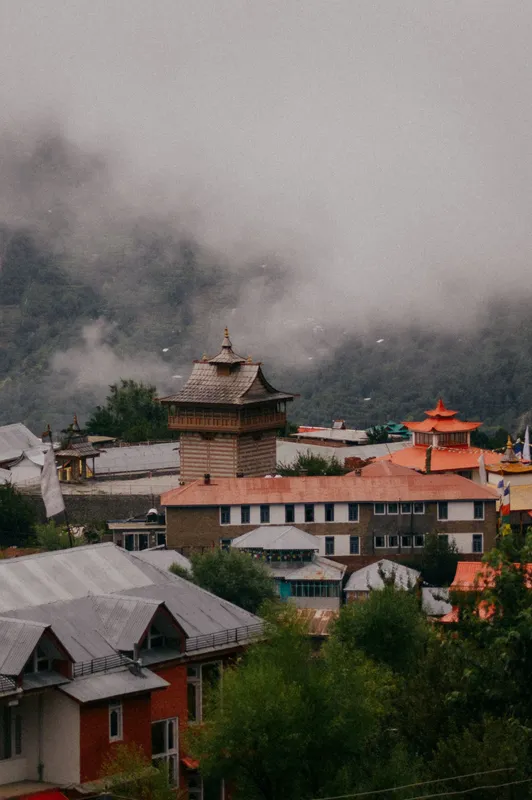
Kalpa is the most culturally interesting village in Kinnaur — the houses are built in the traditional Kinnauri style with carved wooden doors and windows and slate roofs. The Narayan-Nagani temple complex in Kalpa has ancient wooden and stone temples. The Kalpa monastery (Hu-Bu-Lan-Kar) is a Tibetan Buddhist gompa with a large statue of Buddha. The Kinnauri shawl weaving is a traditional craft — the shawls are made from local wool and have distinctive geometric patterns. The village of Chitkul has the last Buddhist monastery before the Tibet border. The Baspa River valley near Sangla has several traditional villages connected by walking trails.
The view of Kinnaur Kailash from Kalpa is the most iconic image of the valley. The mountain changes colour from pink to gold at sunrise and sunset. The apple orchards around Kalpa and Sangla are in full blossom in April and heavy with fruit in September. Chitkul at 3,450 m is the last habited village on the old Hindustan-Tibet road — the view of the Baspa River valley from the village is dramatic. The Sangla Valley is the most accessible part of Kinnaur, with guesthouses, a small market and walking trails along the Baspa River.
How to reach
The nearest railway station is Shimla, about 250 km from Sangla. Bus from Shimla to Sangla or Kalpa takes 7-8 hours (₹300-500). HRTC buses operate daily but road conditions can cause delays. The Hindustan-Tibet Road (NH 5) is prone to landslides — check current timings and fares with HRTC (hrtchp.com) before travel. The nearest airport is Chandigarh, about 320 km away. The Reckong Peo bus stand is the main transport hub for Kinnaur. From Reckong Peo, local buses go to Kalpa (10 km), Sangla (25 km) and Chitkul (45 km). The roads in the valley are narrow and winding.
What a day costs
| Homestay / guesthouse | ₹500–1,000 |
| Food (Kinnauri thali) | ₹200–350 |
| Local transport (bus) | ₹50–150 |
| Chitkul trek guide (if needed) | ₹500–1,000 |
When to go
April to June is the best season — the weather is pleasant, the apple orchards are in bloom (April), and the skies are clear. September to October is the second best period — the apple harvest is in progress and the autumn colours are beautiful. July-August is monsoon — the valley gets less rain than Shimla due to the rain-shadow effect, but landslides can block the road. November to March is very cold (temperatures below freezing at night) — many guesthouses close for the season and snow can block the higher roads. For the best Kinnaur Kailash views, visit in October.
Suggested itinerary
Day 1: Shimla to Sangla
Start from Shimla early morning. Bus to Sangla via Reckong Peo (7-8 hours). Arrive by afternoon. Check into a guesthouse in Sangla. Walk along the Baspa River in the evening.
Day 2: Chitkul Village
Take a local bus from Sangla to Chitkul (45 km, 2 hours, ₹100). Spend the morning in Chitkul — walk through the village, visit the last monastery, see the Baspa River valley view. Return to Sangla by afternoon.
Day 3: Kalpa Village
Take a bus from Sangla to Kalpa via Reckong Peo (35 km, 1.5 hours). Check into a guesthouse in Kalpa. Visit the Narayan-Nagani temple complex and the Kalpa monastery. Watch the sunset on Kinnaur Kailash from the Kalpa viewpoint.
Day 4: Return to Shimla
Catch the morning bus from Reckong Peo to Shimla (7-8 hours). Arrive in Shimla by evening.
Student hacks
- ▸Kinnaur is cheaper than most Himachal destinations — homestays start at ₹500 per night and meals at ₹200.
- ▸Take local HRTC buses between Sangla, Kalpa and Chitkul — ₹50-100 per ride, frequent and reliable.
- ▸Stay in a homestay in Kalpa rather than a hotel — the ₹500-600 rooms with Kinnaur Kailash views are the best value.
- ▸Buy Kinnauri apples directly from the growers in September — ₹40-60 per kg compared to ₹150-200 in Delhi.
- ▸Combine Kinnaur with Spiti for the classic Himachal circuit — the road connects via Kaza (permit required for Spiti).
Safety & permits
Indian nationals do not need a permit for Kinnaur up to Chitkul. An Inner Line Permit is required for travel beyond Chitkul towards the Tibet border — this is rarely needed for tourists. The altitude of Chitkul (3,450 m) can cause mild altitude sickness. The roads in Kinnaur are narrow and landslides are common in the monsoon and winter — check road conditions before travelling. ATMs are available in Reckong Peo and Sangla — carry cash as cards and UPI may not work everywhere. Mobile coverage from BSNL is available in the main villages — other networks may not work in the upper valley. Kinnaur is safe but remote — carry a comprehensive first aid kit.
FAQs
How do I reach Kinnaur from Delhi?
Take a bus to Shimla (9-10 hours, ₹400-700), then a local bus to Kinnaur (7-8 hours, ₹300-500).
What is Kinnaur known for?
Kinnaur is known for its apple orchards, the view of Kinnaur Kailash from Kalpa, the village of Chitkul (last village near Tibet), and Kinnauri shawls.
Do I need a permit for Kinnaur?
No permit is needed up to Chitkul. Permits are required for areas beyond Chitkul near the Tibet border.
Is Kinnaur safe?
Yes. Kinnaur is safe but remote. Landslides can block roads — check conditions before travelling.
How many days do I need in Kinnaur?
4-5 days minimum — one to reach Sangla, one for Chitkul, one for Kalpa, one to return.