
Best months
Per-day budget
₹660–1,600/day
Getting there
Kochi, also known as Cochin, is the largest city in Kerala and the state's cultural and commercial capital. The most interesting part of the city for travellers is Fort Kochi, a historic neighbourhood on the coast where colonial-era buildings, Chinese fishing nets, art galleries and cafes sit side by side. The area is walkable and compact — you can cover the main sights on foot in a single day. The Paradesi Synagogue in Jew Town and the Santa Cruz Basilica reflect the city's multicultural past. The Kochi-Muziris Biennale, India's biggest contemporary art event, is held here every two years from December to April and transforms the entire area into an open-air gallery. Kochi is also the best-connected transport hub in Kerala, making it the natural start or end point for a Kerala trip.
Plan your trip to Kochi Travel Guide — Fort Kochi on a Student Budget
Search and compare prices — we earn a small commission at no extra cost to you.
Flights
Hotels & Hostels
Trains
Search train routes, schedules and fares across India.
Buses
Compare bus operators, schedules and prices.
Why go
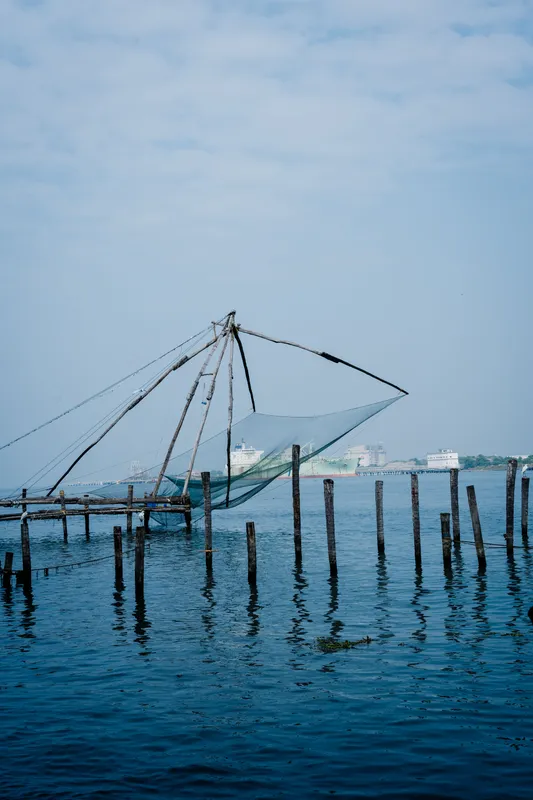
Fort Kochi's history as a colonial trading port is visible on every street. The Chinese fishing nets, brought by traders from the court of Kublai Khan, are the iconic Kochi image — they are operated along the waterfront using a counterweight system. The Paradesi Synagogue, built in 1568, is the oldest active synagogue in the Commonwealth, with hand-painted blue-and-white Cantonese tiles and a gold clock tower. The Mattancherry Palace, built by the Portuguese and gifted to the Raja of Kochi, has beautiful Hindu mural paintings. The Santa Cruz Basilica and St Francis Church — the oldest European church in India — are also within walking distance. The spice-trade history comes alive in the Jew Town antique shops.
Kochi is a centre for Kerala's traditional art forms. The Kathakali performances held at multiple venues in Fort Kochi every evening (₹300-500) include a demonstration of the basic expressions and movements before the main performance. Kalaripayattu, the ancient martial art of Kerala, is performed at dedicated centres. The Kochi-Muziris Biennale, held every two years from December to April at the Aspinwall House and other venues across Fort Kochi, is India's most important contemporary art event. During the Biennale, the city is filled with students and art practitioners from across the world.
Fort Kochi is one of India's most pleasant neighbourhoods for walking. The waterfront path from the fishing nets to Vasco da Gama Square is lined with benches and old trees. The cafes on Princess Street and Rose Street serve excellent Kerala coffee and continental breakfasts. The public ferry from Fort Kochi to Ernakulam (₹3-10) is the cheapest and most scenic way to cross the harbour. Jew Town's antique shops are a fascinating browse — you will find carved furniture, brass lamps and old maps. The Dhobi Khana public laundry and the Kashi Art Gallery are smaller stops worth making.
How to reach
Kochi is well connected by train from all major Indian cities. The main station is Ernakulam Junction (South). Trains from Delhi take about 48 hours (sleeper class ₹1,000-1,500). Check live timings on IRCTC or a train app before booking. Flights from Delhi to Kochi cost ₹4,000-7,000 and take about 3 hours. From Ernakulam Junction, the ferry to Fort Kochi costs ₹10-20 and takes 30 minutes — the most scenic way to arrive. Auto-rickshaws from the station to Fort Kochi cost ₹200-300. Fort Kochi itself is walkable and most accommodation, cafes and galleries are within a 15-minute walk of each other.
What a day costs
| Dorm bed / guesthouse | ₹400–800 |
| Food (Kerala meals / cafe) | ₹200–400 |
| Public ferry / auto | ₹10–100 |
| Kathakali / museum entry | ₹50–300 |
When to go
September to March is the best period. The weather is warm and less humid, making walking around Fort Kochi pleasant. November to February is peak season — the city is lively and the Biennale period (December-April in alternate years) adds a major cultural layer. April to June is hot and humid — Fort Kochi is still walkable in the early mornings but the midday heat can be intense. July to August is monsoon — the rain is heavy but the city is quieter and the gardens are at their greenest. For the Biennale, December to March is the only window in alternate years — check the schedule before planning.
Suggested itinerary
Day 1: Arrive and Fort Kochi Walk
Arrive in Fort Kochi by ferry from Ernakulam. Check into a hostel or guesthouse. Walk through the main sights — the Chinese fishing nets, Vasco da Gama Square, St Francis Church and the Santa Cruz Basilica. Have lunch at a cafe on Princess Street. Visit the Kashi Art Gallery and stroll through the Fort Kochi lanes in the evening.
Day 2: Jew Town and Kathakali
Walk to Jew Town in the morning (30 minutes from Fort Kochi along the waterfront). Visit the Paradesi Synagogue and explore the antique shops on Jew Street. Have lunch at a cafe in Jew Town. Return to Fort Kochi by afternoon. Attend an evening Kathakali performance (₹300-500, 6-7:30 PM).
Day 3: Ferry Ride and Depart
Take the public ferry from Fort Kochi to Ernakulam (₹10, 30 minutes) for the view of the harbour and the port. Visit the Mattancherry Palace if you missed it. Return to Fort Kochi for a final walk along the waterfront. Depart by train or flight.
Student hacks
- ▸The public ferry from Ernakulam to Fort Kochi costs ₹10 — the cheapest way to arrive in Fort Kochi and a scenic harbour ride.
- ▸Kathakali shows in Fort Kochi (₹300-500) include a makeup demonstration before the dance — attend this as it gives context to the performance.
- ▸During Biennale years, many art students volunteer and get free access — check the Biennale website for volunteer applications.
- ▸Eat at the restaurants on the streets away from the waterfront — the same quality food at half the price of the tourist-corner places.
- ▸The Paradesi Synagogue charges a small entry fee for non-Jews — carry ₹10-20 as they do not accept digital payments.
Safety & permits
Indian nationals do not need any permit for Kochi. Fort Kochi is very safe and walkable at all hours. The main safety concern is traffic on the narrow streets — watch for scooters and auto-rickshaws. The Chinese fishing nets area can be crowded in the evening — keep your belongings secure. The Jew Town area is safe but some antique shops quote inflated prices for tourists. The public ferry is safe and well maintained. ATMs are available in Fort Kochi and all major areas. Solo travel is very common. The city has good mobile network coverage.
FAQs
How do I reach Kochi from Delhi?
Trains from Delhi to Ernakulam Junction take about 48 hours (sleeper class ₹1,000-1,500). Flights take 3 hours (₹4,000-7,000).
What is the best area to stay in Kochi?
Fort Kochi is the best area for travellers — walkable, historic and full of cafes and galleries. Ernakulam is the modern city centre with transport links.
What is the Kochi-Muziris Biennale?
India's largest contemporary art festival, held every two years from December to April in Fort Kochi. Venues include warehouses, galleries and public spaces.
Is Kochi safe for solo travellers?
Yes. Fort Kochi is very safe and walkable. Solo travellers, including women, are very common. The area is busy with tourists and locals.
How many days do I need in Kochi?
Two full days is enough for Fort Kochi, Jew Town and the main attractions. Three days allows a relaxed pace with time for the ferry and cafes.
What food should I try in Kochi?
Kerala seafood, appam with stew, Kerala parotta with beef curry (if you eat meat), and filter coffee. Fort Kochi has excellent cafes for breakfast.