
Pune · Deccan
Pune Travel Guide — Student Capital on a Budget
Best months
Per-day budget
₹650–1,550/day
Getting there
Pune is Maharashtra's second city and the student capital of western India. It has the energy of a city built around universities — FC Road and Koregaon Park are packed with cafes, bookshops, live music venues and students from across India. The city has a proud Maratha history visible in the Shaniwar Wada palace and the Sinhagad fort on the hills above the city. Pune is also the gateway to the Sahyadri range, with dozens of monsoon treks and weekend forts accessible within a 1-2 hour drive. The city has a strong food scene, from street-food stalls on MG Road to multi-cuisine restaurants in Koregaon Park. The weather is pleasant year-round compared to Mumbai and Delhi, and the student population keeps everything lively and affordable.
Plan your trip to Pune Travel Guide — Student Capital on a Budget
Search and compare prices — we earn a small commission at no extra cost to you.
Flights
Hotels & Hostels
Trains
Search train routes, schedules and fares across India.
Buses
Compare bus operators, schedules and prices.
Why go
Pune has more universities and colleges than any other Indian city outside Delhi and Bengaluru. The area around FC Road and Deccan Gymkhana is dense with bookstores, cheap eateries and photocopy shops that serve the student population. The Osho International Meditation Resort in Koregaon Park draws international visitors for meditation programmes. The University of Pune campus is one of India's largest and has a museum and a biodiversity park. For student travellers, Pune offers the experience of living in an Indian college town — the energy is infectious, the food is cheap, and the nightlife is student-friendly rather than flashy.
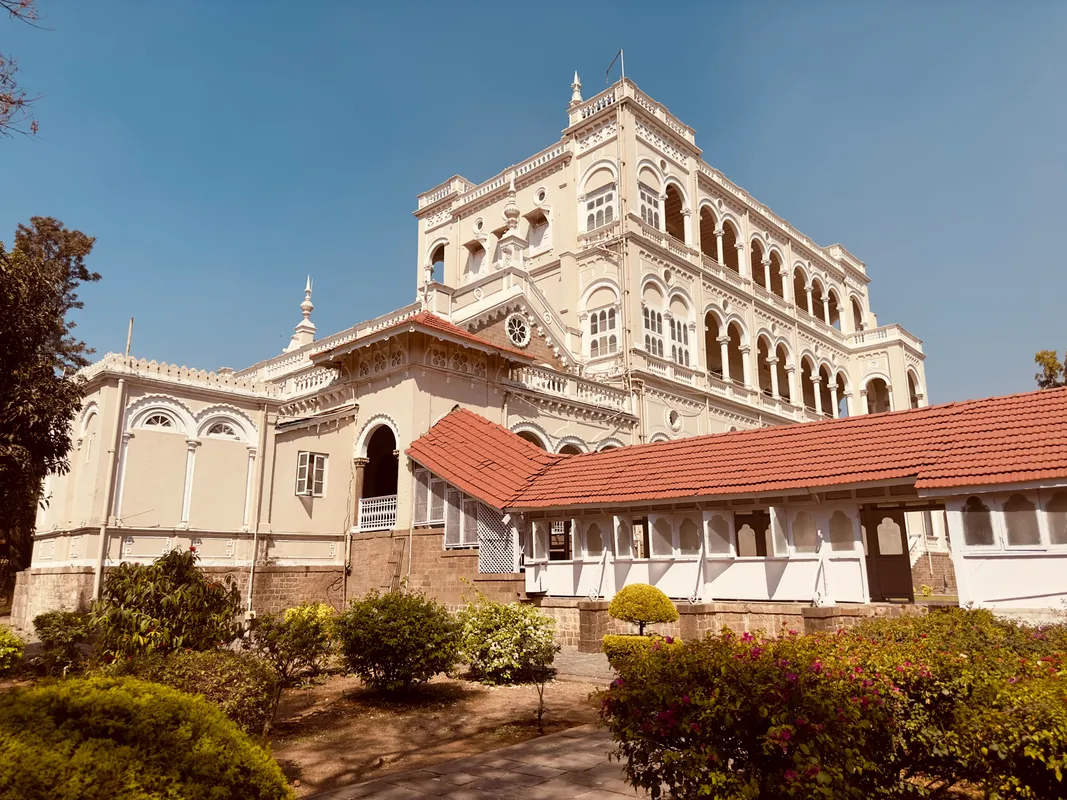
Pune's Maratha heritage is visible across the city. The Shaniwar Wada palace, built in 1732 as the seat of the Peshwas, is the historic heart of the city. The palace was largely destroyed by a fire in 1828, but the remaining walls, gates and gardens give a sense of its scale. The Aga Khan Palace, where Mahatma Gandhi was imprisoned in 1942, is now a memorial with his ashes. The Pataleshwar Cave Temple, carved from a single rock in the 8th century, is one of the oldest structures in Pune. The city also has a strong museum culture — the Raja Dinkar Kelkar Museum has an eclectic collection of Indian artefacts.
Pune is the base for Sahyadri treks, which are the city's biggest outdoor activity. The Sinhagad Fort, 35 km from the city, is a popular sunrise-to-midday trek with views of the surrounding hills. The Rajgad, Torna and Lohagad forts are 1-2 hour drives from the city and offer full-day treks in the monsoon season. The city itself has excellent cafe culture — FC Road is the classic student strip, while Koregaon Park has more upscale places. The Bund Garden and the Mula-Mutha riverfront areas are good for evening walks. Pune also has a growing craft beer scene with several microbreweries.
How to reach
Pune is well connected to Mumbai by train and bus. Trains from Mumbai to Pune take about 3-4 hours (sleeper class ₹150-300). Check live timings on IRCTC or a train app before booking. Buses from Mumbai to Pune take about 3-4 hours (₹200-400). The nearest airport is Pune International, about 10 km from the city centre, with flights from Delhi under ₹4,000. Pune Junction railway station is in the city centre and close to the main areas. Auto-rickshaws in Pune are metered — insist on the meter. The city has a good bus network and app-based cabs are widely available.
What a day costs
| Dorm bed / budget hotel | ₹400–800 |
| Food (street food / thali) | ₹150–350 |
| Local transport (auto / bus) | ₹50–200 |
| Fort trek / museum entry | ₹50–200 |
When to go
June to February is the best period. June to September is the monsoon season — the Sahyadri hills turn lush green, the waterfalls are full, and the fort treks are at their most dramatic. The treks can be slippery and leeches are common. October to February is the dry season with clear skies and pleasant temperatures (20°C-28°C). March to May is the hot season — temperatures cross 35°C and midday treks are uncomfortable. November to February is the best time for city exploration and cafe hopping. For trekking, the monsoon (June-September) is the most popular period but requires preparation for wet conditions.
Suggested itinerary
Day 1: Arrive and Shaniwar Wada
Arrive in Pune from Mumbai or Delhi. Check into a hostel near FC Road or Koregaon Park. Visit the Shaniwar Wada palace in the afternoon — the complex is small and takes about an hour. Walk through the nearby Laxmi Road market area. Have dinner on FC Road — the student-food strip with dozens of affordable restaurants.
Day 2: Sinhagad Fort Trek
Start early (6 AM) for the Sinhagad Fort trek. Take a bus or shared taxi from the city to the base village (₹100-200). The trek from the base to the fort takes about 1-1.5 hours. Explore the fort ruins and the views. Descend by midday. Return to the city and visit the Aga Khan Palace in the afternoon.
Day 3: Koregaon Park and Depart
Visit the Koregaon Park area in the morning — walk through the Osho garden (entry to the meditation resort is separate) and the nearby cafes. Visit the Raja Dinkar Kelkar Museum. Depart by evening train or flight.
Student hacks
- ▸FC Road is the cheapest food strip in Pune — try the vada pav, missal pav and bhel from street stalls for under ₹50.
- ▸The Sinhagad trek is free and takes 1-1.5 hours from the base — start before 6 AM to avoid the heat and crowds.
- ▸Pune auto-rickshaws have meters — insist on the meter or use app-based cabs; avoid fixed-fare bargains from the station.
- ▸Osho International Meditation Resort is expensive for programmes but the garden area is free to walk through.
- ▸The Raja Dinkar Kelkar Museum costs ₹50 for students — show your college ID for the discounted rate.
Safety & permits
Indian nationals do not need any permit for Pune or the surrounding forts. The Sinhagad and other treks are free to access. The Shaniwar Wada entry fee for Indians is about ₹25. The Aga Khan Palace entry fee is about ₹20. Both are ASI-run and cheap; pay at the gate. The fort treks are safe but require good shoes — some sections are steep and can be slippery after rain. Monsoon treks should be started early in the morning to avoid afternoon thunderstorms. Carry at least 2 litres of water for any fort trek. ATMs and UPI are widely available. Pune is safe for solo travellers, including women. Standard city precautions apply for late-night walks in quiet areas.
FAQs
How do I reach Pune from Mumbai?
Trains from Mumbai to Pune take 3-4 hours (sleeper class ₹150-300). Buses take 3-4 hours (₹200-400). This is the most common route for travellers arriving from Delhi or other cities.
What is FC Road known for?
FC Road is the student hub of Pune — it has bookshops, cheap restaurants, photocopy stalls and a lively street-food scene. It is the best place in Pune for budget food.
What is the best time for the Sinhagad trek?
The monsoon (June-September) is the most popular time — the fort and hills are green and waterfalls are active. The trek is also possible year-round. Start early in the morning.
Is Pune safe for solo travellers?
Yes. Pune is a student city and very safe. The main areas — FC Road, Koregaon Park, Deccan — are well lit and busy. Standard city precautions apply.
How many days do I need in Pune?
Two full days is enough — one for the city sights (Shaniwar Wada, Aga Khan Palace, museum), one for a fort trek. Three days allows a relaxed pace.
What treks can I do from Pune?
Sinhagad (1-hour drive, 1-hour climb) is the easiest. Rajgad, Torna and Lohagad are 1-2 hour drives away and offer tougher, longer treks. Most are doable as day trips.