
TBD · Trans-Himalaya
Spiti Valley Travel Guide — Cold Desert on a Budget
Best months
Per-day budget
₹1,120–2,500/day
Getting there
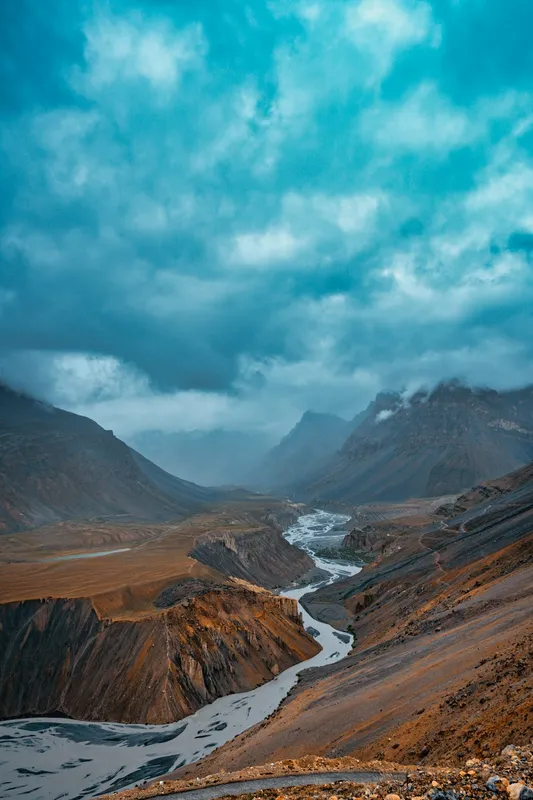
Spiti Valley is a cold desert mountain region in the Trans-Himalaya of Himachal Pradesh. It looks nothing like the rest of the state — dry, barren, lunar landscapes at altitudes above 3,500 m, dotted with whitewashed Buddhist monasteries and tiny villages clinging to cliff edges. The main settlement is Kaza, a dusty town where travellers stock up on supplies before heading deeper into the valley. Spiti is for those who want the raw Himalayas without the greenery and crowds of Manali. You come here for the high-altitude villages like Kibber, Langza and Komic, for the turquoise waters of Chandratal Lake, and for the sense of remoteness that few places in India still offer. The roads are rough, the oxygen is thin, and the views are extraordinary.
Plan your trip to Spiti Valley Travel Guide — Cold Desert on a Budget
Search and compare prices — we earn a small commission at no extra cost to you.
Flights
Hotels & Hostels
Trains
Search train routes, schedules and fares across India.
Buses
Compare bus operators, schedules and prices.
Why go
Spiti is a destination for high-altitude road trips and treks. The circuit via Shimla and the Kinnaur region is one of India's most spectacular drives. Once in the valley, you can trek to the base of the Ghepang or Parang La passes, or take shorter walks between the high villages. Chandratal Lake, at 4,300 m, is accessible by road from Batal or by a day hike. Pin Valley National Park, a side valley off the main Spiti River, offers snow leopard tracking in winter and wildflower trails in summer. Biking the Spiti circuit on a rented Royal Enfield is a rite of passage for many adventure travellers.
Spiti is home to some of the oldest Buddhist monasteries in the Himalayas. Key Monastery, perched on a hill above Kaza, is the largest and most photogenic. Tabo Monastery, about an hour from Kaza, is often called the Ajanta of the Himalayas for its ancient murals and statues. The villages of Langza and Komic have small gompas and fossil-rich fields where you can find marine fossils millions of years old. The local Spitian culture is distinct from the rest of the state, with its own dialect, cuisine and festivals. Interacting with families in homestays is the best way to experience it.
The monasteries of Spiti have been centres of Buddhist learning and practice for over a thousand years. Komic village houses the highest motorable monastery in the world at 4,587 m. Tabo Monastery, founded in 996 AD, has some of the best-preserved early Tibetan Buddhist art in existence. A meditation or a quiet walk around these complexes offers a stark, peaceful atmosphere that is hard to find in India's more commercial pilgrimage sites. The landscape itself — the silence, the thin air, the scale of the mountains — creates a meditative experience without any effort on your part.
How to reach
There are two main routes into Spiti. The Shimla route via Kinnaur is open longer — take an HRTC bus from Shimla to Reckong Peo (₹300-500, 8 hours) and then another bus to Kaza (₹400-600, 8 hours). This route is open from May to October. The Manali route via the Kunzum Pass is shorter but open only from June to October. HRTC buses from Manali to Kaza take about 10-12 hours (₹500-700). Exact opening dates depend on snow clearance each year — check BRO/HRTC updates before planning a June crossing. Shared jeeps between major towns are an alternative to buses and cost ₹500-1,000 per leg depending on distance. The nearest airport is Bhuntar (Kullu), 260 km from Kaza, with limited flights from Delhi.
What a day costs
| Homestay guesthouse | ₹500–1,000 |
| Food (dal-rice / thukpa) | ₹200–400 |
| Local transport (shared jeeps) | ₹400–1,000 |
| Monastery entry / parking fees | ₹20–100 |
When to go
June to September is the only feasible window for most travellers. The roads open by early June after winter snow clearance and close again by October. July and August are the peak months — expect some cloud cover and occasional rain. September is the best month: clear skies, stable weather, and fewer tourists than July-August. October is possible in the first half but roads can close early if snow arrives. Winter (November-May) is extreme — temperatures drop to -20°C, most roads and homestays close, and the valley is accessible only to expedition teams with proper gear.
Suggested itinerary
Day 1: Arrive in Kaza and Acclimatise
Arrive in Kaza by road from Manali or Shimla. Check into a homestay or guesthouse. Spend the day walking around the town — visit the local market, the small monastery, and the Kaza bridge over the Spiti River. Rest and drink plenty of water. Altitude is 3,600 m — do not rush, do not drink alcohol on the first day.
Day 2: High Villages Loop — Kibber, Langza, Komic
Hire a shared jeep or join a group from Kaza for the high villages circuit. Visit Kibber (4,270 m), one of the highest inhabited villages connected by road. Continue to Langza to see the fossil site and the giant Buddha statue. End at Komic village (4,587 m) and its monastery. Return to Kaza by evening.
Day 3: Tabo Monastery and Chandratal
Take a shared jeep to Tabo Monastery (45 km from Kaza) — it will take about an hour each way. Spend the morning exploring the ancient temples. If you have time and clear weather, continue toward Chandratal Lake (another 2 hours by jeep from Batal). Return to Kaza by evening. Start planning your exit route the next day.
Student hacks
- ▸ATMs are unreliable in Spiti — withdraw enough cash from Shimla or Manali before entering the valley.
- ▸Homestays cost ₹500-800 per night with meals included — better value than guesthouses in Kaza town.
- ▸Shared jeeps between villages cost ₹300-500 per person — ask your homestay host to help find a group.
- ▸Carry a BSNL SIM card — Jio and Airtel have very limited coverage in most parts of Spiti.
- ▸Buy a fossil from local kids in Langza — they sell small ammonite fossils for ₹50-100 and it supports village income.
Safety & permits
Indian nationals do not need an Inner Line Permit for Spiti Valley. For foreign nationals, a Protected Area Permit is required, which is processed through registered tour operators in Delhi or Shimla. As of 2026 this includes Pin Valley and Kaza — Indians only need a government photo ID for the police check-posts at Jangi and Sumdo. Altitude sickness is a real concern — Kaza is at 3,600 m and some villages reach 4,500 m. Spend at least a day acclimatising in Kaza before heading higher. Carry Diamox and consult a doctor before the trip if you have altitude concerns. ATMs are scarce — there is one in Kaza that works intermittently. Carry enough cash from Shimla or Manali. Mobile network is limited to BSNL and sporadic Jio in Kaza; no signal in most of the valley.
FAQs
How do I reach Spiti Valley from Delhi?
Take an overnight bus from Delhi to Shimla (₹400-700, 8-10 hours), then an HRTC bus from Shimla to Reckong Peo (₹300-500, 8 hours), and another bus from Reckong Peo to Kaza (₹400-600, 8 hours). This route takes 2-3 days total. The alternative via Manali is faster but only open June-October.
Do I need a permit to visit Spiti Valley?
Indian nationals do not need any permit. Foreign nationals need a Protected Area Permit, which must be arranged through a registered tour operator. Carry a government photo ID for the check-post registrations.
Is altitude sickness a problem in Spiti?
Yes. Kaza is at 3,600 m and many excursions go above 4,500 m. First-time high-altitude travellers should spend a full day resting in Kaza before any physical activity. Carry Diamox if prescribed, drink plenty of water, avoid alcohol, and descend if symptoms become severe.
What is the best time to visit Spiti Valley?
June to September is the only window for most travellers. September offers the clearest weather. July-August is the monsoon season in the plains but Spiti receives very little rain — the main concern is road blockages from rain-induced landslides.
Is there mobile network and internet in Spiti?
BSNL works in Kaza and some larger villages. Jio and Airtel are unreliable for data. Most homestays and guesthouses in Kaza have Wi-Fi, but speeds are slow. In the high villages and on the road, you will have no network for long stretches.
Can I do Spiti on a bike?
Yes. The Spiti circuit is popular with bikers. Rented Royal Enfields are available in Manali and Shimla for ₹1,000-2,000 per day. The roads are a mix of paved and rough dirt sections. Carry basic repair tools and warm riding gear. Biking is recommended only for experienced riders.