TBD · Eastern Himalaya
Darjeeling Travel Guide — Toy Train and Tea on a Budget
Best months
Per-day budget
₹700–1,950/day
Getting there
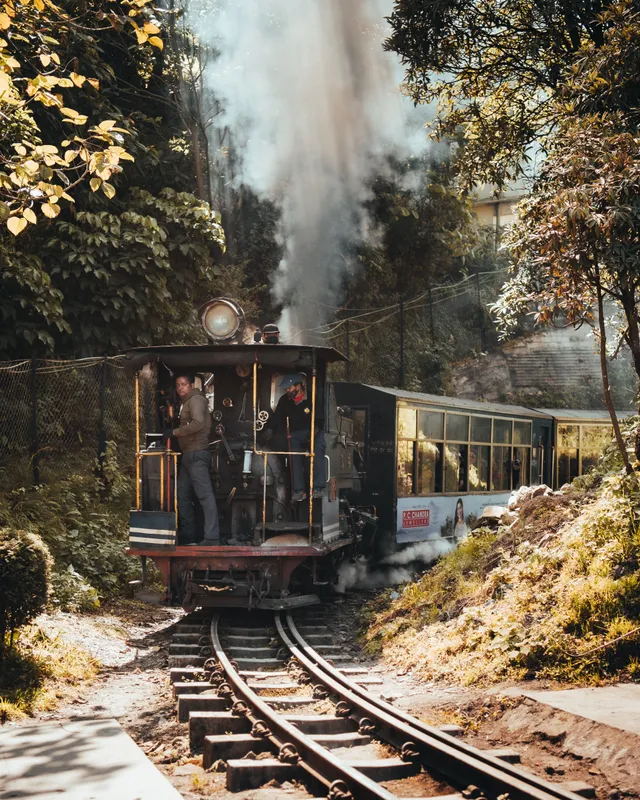
Darjeeling sits on a ridge in the Eastern Himalayas of West Bengal, surrounded by tea plantations and overlooked by the Kanchenjunga massif. It is one of India's most iconic hill stations and has a character unlike the Himachal hill stations — a mix of colonial hill-station architecture, Nepali and Tibetan culture, and a history tied to the tea industry. The main attractions are the sunrise view of Kanchenjunga from Tiger Hill, the UNESCO-listed Darjeeling Himalayan Railway (the toy train), and the numerous tea estates that produce some of the most expensive tea in the world. The town is built on steep slopes, so you will walk a lot of stairs. The cafe scene is strong, especially around Chowrasta, the main square.
Plan your trip to Darjeeling Travel Guide — Toy Train and Tea on a Budget
Search and compare prices — we earn a small commission at no extra cost to you.
Flights
Hotels & Hostels
Trains
Search train routes, schedules and fares across India.
Buses
Compare bus operators, schedules and prices.
Why go
Darjeeling is a walking town. Chowrasta, the central square, is pedestrian-only and lined with bookshops, confectioners and old colonial buildings. The main Mall Road wraps around Observatory Hill and offers views of the valley. The tea estates — particularly Happy Valley, Glenburn and Makai Bari — are open for walks and tastings. A visit to a tea factory explains the difference between first-flush (March), second-flush (May-June) and autumn teas. The Himalayan Mountaineering Institute and the Padmaja Naidu Himalayan Zoological Park (home to red pandas and snow leopards) are educational and leisurely stops. The toy train from Darjeeling to Ghoom through the hills is a slow, scenic experience.
Darjeeling's culture is shaped by its Nepali, Tibetan, Bhutia and Lepcha communities. The monasteries around Darjeeling — Ghoom Monastery, Bhutia Busty Monastery and the Tibetan Self-Help Centre — offer insight into the region's Buddhist heritage. The town has a strong tea-trade history visible in the architecture of the Planters' Club and the old hotels. The Darjeeling Carnival and the Tea and Tourism Festival, held through the year, showcase local music and food. The local food is another cultural entry point — momos, thukpa, and the famous Darjeeling tongba (millet drink) are found at street stalls and small restaurants throughout the town.
Darjeeling is the starting point for the Singalila Ridge trek. The trail from Manebhanjan, about an hour from Darjeeling, follows the ridge along the India-Nepal border to Sandakphu and Phalut, offering close views of four of the world's five highest peaks — Everest, Kanchenjunga, Lhotse and Makalu. The trek is moderate and takes 5-7 days. For shorter hikes, the trail to Tiger Hill (11 km from town) or the walk around the Senchal Wildlife Sanctuary are day-trip options. The Batasia Loop, a spiral railway loop with a garden and war memorial, is a pleasant walk from the town centre.
How to reach
The nearest major railhead is New Jalpaiguri (NJP), about 80 km from Darjeeling. Trains from Delhi to NJP take 12-14 hours (sleeper class ₹500-700). Check live timings on IRCTC or a train app before booking. From NJP, shared jeeps to Darjeeling depart from the station forecourt and take about 3 hours (₹300-400 per person). Local buses are cheaper (₹200) but take 4-5 hours and are less comfortable. The nearest airport is Bagdogra, about 95 km away, with flights from Delhi under ₹6,000. From Bagdogra, shared jeeps to Darjeeling cost ₹400-500 per person. The toy train from NJP to Darjeeling is a scenic option but takes 7-8 hours.
What a day costs
| Dorm bed / budget hotel | ₹400–800 |
| Food (momos / thali) | ₹150–350 |
| Local transport (shared jeep) | ₹100–300 |
| Toy train / entry fees | ₹50–500 |
When to go
March to May is the best period — the weather is pleasant, rhododendrons are in bloom, and the visibility of Kanchenjunga is good. October to December is the second best window with clear skies and good mountain views. January to February is cold (temperatures near freezing) but the skies are the clearest for mountain photography. June to September is monsoon — expect rain, fog and landslides on the road from NJP. The tea gardens are at their greenest but the mountain views are rare. For mountain views, the October-November window is the most reliable.
Suggested itinerary
Day 1: Arrive and Chowrasta Walk
Arrive from NJP or Bagdogra by afternoon shared jeep. Check into a hostel or hotel near Chowrasta. Walk along the Mall Road and Chowrasta square. Visit the Darjeeling Himalayan Railway Museum near the station. Have dinner at a cafe on the Mall.
Day 2: Tiger Hill Sunrise and Tea Estate
Leave by 4 AM for Tiger Hill (shared jeep ₹300-500 per person). Watch the sunrise over Kanchenjunga — the view on a clear morning is the highlight of a Darjeeling trip. Visit the Batasia Loop and Ghoom Monastery on the return. Spend the afternoon at Happy Valley Tea Estate for a factory walk and tasting.
Day 3: Mountaineering Institute and Toy Train
Visit the Himalayan Mountaineering Institute and the zoo in the morning — they are next to each other on Observatory Hill. Take the toy train from Darjeeling to Ghoom and back in the afternoon (₹300-500, 2 hours round trip). Pack for departure.
Student hacks
- ▸Shared jeeps from NJP to Darjeeling cost ₹300-400 per person and take 3 hours — cheaper and faster than the toy train.
- ▸Stay near Chowrasta or the Mall — everything is within walking distance and the steep roads are easier near the top.
- ▸The toy train joy ride from Darjeeling to Ghoom is cheaper (₹300-500) than the full NJP-Darjeeling ride (₹1,500+).
- ▸Tea estate walks at Happy Valley are free — but the tasting session at the factory costs ₹50-100.
- ▸Book the Tiger Hill jeep the evening before — shared vehicles leave from near Chowrasta starting at 4 AM.
Safety & permits
Indian nationals do not need any permit for Darjeeling town or the surrounding areas. For the Sandakphu trek (Singalila Ridge), Indian nationals need a permit from the forest department office in Manebhanjan or Darjeeling. The permit is issued at the Manebhanjan checkpost (about ₹200 for Indians) and a registered local guide is mandatory; the park closes for monsoon from mid-June to mid-September. The Tiger Hill sunrise trip involves an early morning jeep ride — book the evening before through your hotel or at the taxi stand near Chowrasta. The Darjeeling streets are steep and uneven — wear walking shoes. ATMs are available in the main market area. Solo travel is common and safe.
FAQs
How do I reach Darjeeling from Delhi?
Take a train from Delhi to New Jalpaiguri (sleeper class ₹500-700, 12-14 hours), then a shared jeep from NJP to Darjeeling (₹300-400, 3 hours).
What is the best time to see Kanchenjunga from Darjeeling?
October to December has the clearest skies for mountain views. March to May is also good. Monsoon (June-September) has very limited visibility.
Is the toy train worth it?
The joy ride from Darjeeling to Ghoom (₹300-500, 2 hours) is worth it for the experience. The full ride from NJP to Darjeeling (7-8 hours) is more scenic but time consuming.
Do I need a permit for the Sandakphu trek?
Indian nationals need a forest permit, available at the forest office in Manebhanjan or through a registered trekking operator. Carry ID photos.
Is Darjeeling safe for solo travellers?
Yes. Darjeeling is very safe and sees many solo travellers. The main areas around Chowrasta and the Mall are well lit and busy. Standard precautions for late-night walks apply.
What food is Darjeeling famous for?
Momos, thukpa (noodle soup), and Darjeeling tea are the staples. Tongba (millet drink served in a wooden container with hot water) is a local speciality worth trying.