Gangtok · East Sikkim
Gangtok Travel Guide — Sikkim Capital on a Student Budget
Best months
Per-day budget
₹750–2,000/day
Getting there
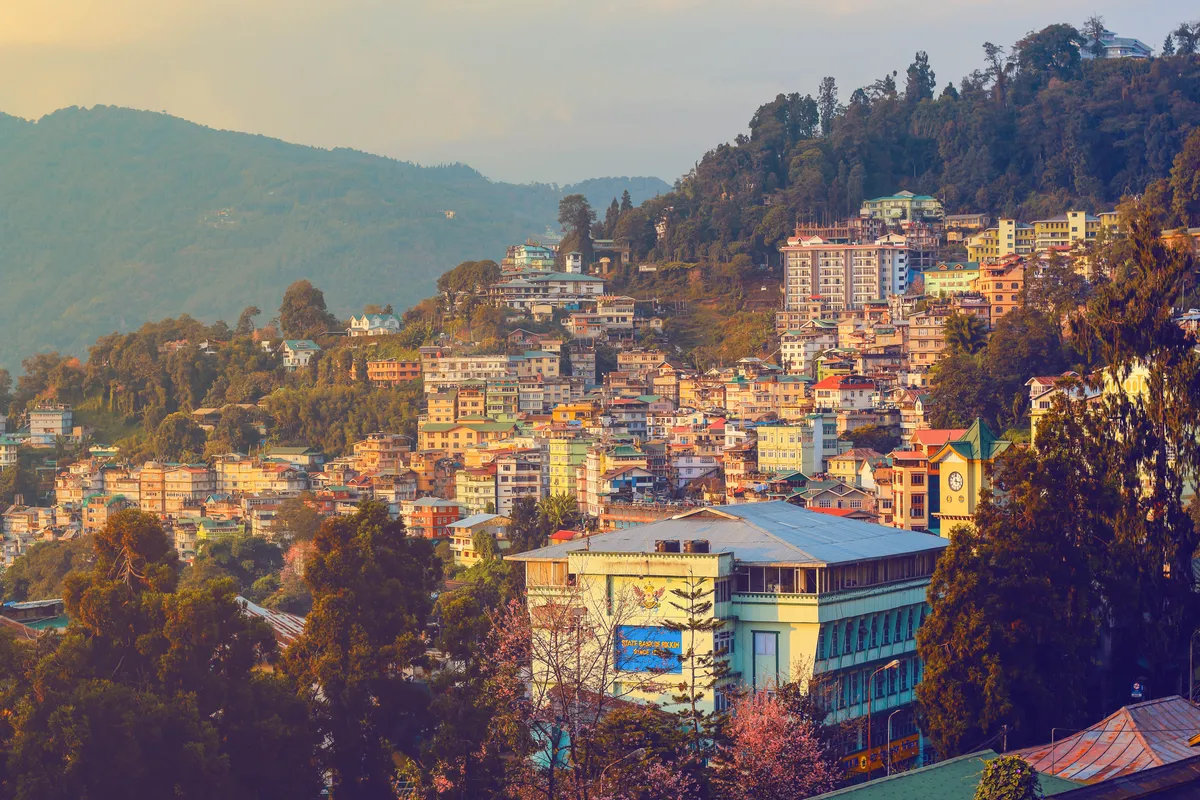
Gangtok is the capital of Sikkim and the most accessible base for exploring the state. The city sits on a ridge at 1,500 m, with the Kanchenjunga range visible above the rooftops on clear days. MG Marg, the pedestrian-only main street, is the heart of Gangtok — it has cafes, restaurants, souvenir shops and the city's social life concentrated along a 500-metre stretch. The city is cleaner and more orderly than most Indian hill stations, with a strong Tibetan Buddhist influence visible in the monasteries and the local architecture. Gangtok is the starting point for permits into north Sikkim and for trips to Tsomgo Lake and Nathu La. The ropeway ride over the city and the Rumtek Monastery are the top attractions within easy reach.
Plan your trip to Gangtok Travel Guide — Sikkim Capital on a Student Budget
Search and compare prices — we earn a small commission at no extra cost to you.
Flights
Hotels & Hostels
Trains
Search train routes, schedules and fares across India.
Buses
Compare bus operators, schedules and prices.
Why go
MG Marg is designed for walking. It is closed to cars through the day, with benches, flower beds and a line of restaurants serving Tibetan, Indian and continental food. The Gangtok ropeway gives a 10-minute bird's-eye view of the city spread across the ridge. The Namgyal Institute of Tibetology has a museum with thangkas, statues and ritual objects. The Flower Exhibition Centre near MG Marg has seasonal orchid and orchid shows. For relaxation, the hot springs at Yumthang are a day trip away, and the Gangtok viewpoint at Tashi Viewpoint offers a quiet spot for a sunset view of the mountains.
The most popular day trip from Gangtok is to Tsomgo Lake (12,400 ft) and Nathu La pass (14,000 ft) on the India-China border. The lake is a sacred glacial lake surrounded by mountains, often frozen in winter. The road climbs steeply through rhododendron and alpine forests. Nathu La requires a separate permit and opens on certain days of the week. For multi-day adventures, north Sikkim — Gurudongmar Lake, Yumthang Valley and the Zero Point — requires a separate permit and a 3-4 day itinerary. The trekking options around Dzongri and Goecha La start from Yuksom in west Sikkim and require separate planning.
Rumtek Monastery, 24 km from Gangtok, is one of the largest and most important monasteries in Sikkim. It is the seat of the Karmapa, the head of the Karma Kagyu school of Tibetan Buddhism. The monastery complex has a beautiful main prayer hall with murals and a golden stupa. Enchey Monastery, closer to town, is smaller but active with monks and prayer ceremonies. The Do Drul Chorten stupa near MG Marg is a large white-and-gold chorten surrounded by prayer wheels. The Sikkim Himalayan Zoological Park has Himalayan wildlife but is more of an educational stop.
How to reach
The nearest major transport hub is New Jalpaiguri (NJP), about 120 km from Gangtok. Trains from Delhi to NJP take 12-14 hours (sleeper class ₹500-700). From NJP, shared jeeps to Gangtok run frequently and take about 4-5 hours (₹400-600 per person). Check live timings on IRCTC or a train app before booking. The nearest airport is Bagdogra, about 120 km away, with flights from Delhi under ₹6,000. From Bagdogra, shared jeeps to Gangtok cost ₹500-700 per person. The Gangtok shared jeep stand is near the NJP station. Once in Gangtok, MG Marg and the main tourist area are walkable. Local taxis and shared vehicles cover outlying areas like Rumtek and Tsomgo Lake.
What a day costs
| Dorm bed / budget hotel | ₹400–800 |
| Food (momos / thali) | ₹200–400 |
| Local transport (shared jeep) | ₹100–500 |
| Ropeway / entry fees | ₹50–300 |
When to go
March to May is the best period — the weather is warm, rhododendrons are in bloom, and the mountain views are clear. October to December is the second best window with crisp air and clear skies. January to February is cold — Tsomgo Lake is frozen and Nathu La is closed. June to September is monsoon — the city gets heavy rain, cloud cover blocks mountain views, but the waterfalls are full and the valley is intensely green. For Tsomgo Lake and Nathu La, visit March-May or October-November when the road is open and the weather is stable.
Suggested itinerary
Day 1: Arrive and MG Marg
Arrive in Gangtok from Bagdogra or NJP by afternoon shared jeep. Check into a hostel near MG Marg. Spend the evening walking the length of MG Marg — it is closed to traffic and lined with cafes and restaurants. Visit the Do Drul Chorten stupa before dark. Have dinner at one of the rooftop restaurants on MG Marg.
Day 2: Tsomgo Lake and Nathu La
Leave by 7 AM for Tsomgo Lake (shared taxi ₹600-800 per person, 2 hours). Spend an hour at the lake. If Nathu La is open and you have a permit, continue for another hour to the border pass. Return to Gangtok by 4 PM. Rest and explore the MG Marg market in the evening.
Day 3: Rumtek Monastery and Depart
Take a shared taxi or local bus to Rumtek Monastery (24 km, ₹200-300, 45 minutes). Spend 1-2 hours exploring the monastery complex. Return to Gangtok by midday. Visit the Namgyal Institute of Tibetology if time permits. Pack for departure in the evening.
Student hacks
- ▸Shared jeeps from NJP to Gangtok cost ₹400-600 per person — cheaper than a private taxi which costs ₹3,000-4,000.
- ▸Stay on MG Marg or within a 5-minute walk — it saves you taxi fares within the city.
- ▸Tsomgo Lake is best visited as a group shared taxi — 4-6 people splitting the cost makes it ₹600-800 per person.
- ▸Nathu La permit processing takes 2-3 days through a tour operator — submit your ID copies on arrival in Gangtok.
- ▸The Gangtok ropeway costs ₹150-200 for a return ticket — best taken in the late afternoon for the city views.
Safety & permits
Indian nationals need a Protected Area Permit for Nathu La and for north Sikkim (Gurudongmar Lake, Yumthang Valley). These permits are arranged through registered tour operators in Gangtok and require 2-3 working days. Individuals cannot apply online — a registered Gangtok operator files the permit (about ₹200 per person for Nathu La). The pass stays closed on Mondays and Tuesdays, and only Indian citizens may visit. Tsomgo Lake is open without a permit but the road check-post may ask for identification. Carry photocopies of your ID for permit processing. The altitude at Tsomgo Lake is 3,780 m — mild altitude sickness is possible. Nathu La at 4,300 m is higher and the symptoms can be more pronounced. Carry warm clothing for Tsomgo and Nathu La even in summer. ATMs are widely available in Gangtok.
FAQs
How do I reach Gangtok from Delhi?
Take a train from Delhi to New Jalpaiguri (sleeper class ₹500-700, 12-14 hours), then a shared jeep from NJP to Gangtok (₹400-600, 4-5 hours).
Do I need a permit for Tsomgo Lake?
Indian nationals do not need a permit for Tsomgo Lake. For Nathu La and north Sikkim, a Protected Area Permit is required through a registered tour operator.
Is Gangtok safe for solo travellers?
Yes. Gangtok is very safe and well maintained. MG Marg is busy until late evening. Solo female travellers are common.
What is the best time to visit Gangtok?
March to May and October to December are the best periods. Monsoon (June-September) has rain and cloud cover. January-February is cold but the skies are clear.
How many days do I need in Gangtok?
Two full days for the city — MG Marg, Rumtek, ropeway and the Tibetology museum. Three days if you include Tsomgo Lake and Nathu La.
What is MG Marg?
MG Marg is the pedestrian-only main street of Gangtok. It is where most of the city's cafes, restaurants, shops and nightlife are concentrated. It is closed to traffic through the day.