
Haridwar · Garhwal
Haridwar Travel Guide — Ganga Aarti and Ashram Stays
Best months
Per-day budget
₹300–1,050/day
Getting there
Haridwar is one of the holiest cities in India, where the Ganga leaves the mountains and enters the plains. The city sits on the banks of the river in the Garhwal region of Uttarakhand, and its main focal point is Har Ki Pauri — the ghat where the evening Ganga Aarti draws thousands of people every single night. Unlike Varanasi, Haridwar feels smaller and more contained, and the river here is cleaner and faster. The streets around the ghats are lined with ashrams, eateries and shops selling puja items. The city is one of the four Kumbh Mela venues and hosts a massive pilgrimage every 12 years. For budget travellers, Haridwar offers very cheap accommodation in ashram dorms, free meals at many akharas, and a spiritual experience that does not require any planning or money.
Plan your trip to Haridwar Travel Guide — Ganga Aarti and Ashram Stays
Search and compare prices — we earn a small commission at no extra cost to you.
Flights
Hotels & Hostels
Trains
Search train routes, schedules and fares across India.
Buses
Compare bus operators, schedules and prices.
Why go
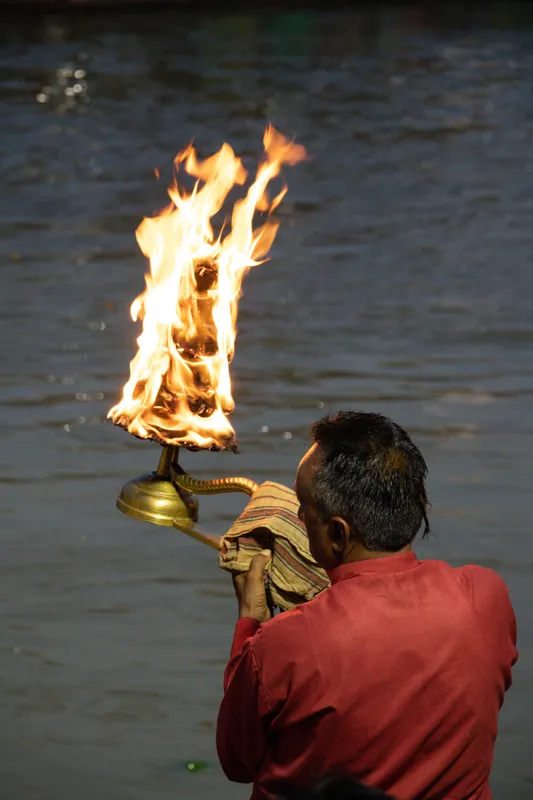
The Ganga Aarti at Har Ki Pauri is the main reason most people visit Haridwar. Every evening at sunset, priests perform a fire ritual on the main ghat with large brass lamps, incense and chanting. The ceremony lasts about 30 minutes and is open to all. Boats on the river give you a different perspective. Haridwar is also a major starting point for the Char Dham Yatra — pilgrims begin their journey to Badrinath, Kedarnath, Gangotri and Yamunotri from here. The city has hundreds of ashrams and temples, some of which host daily discourses and meditation sessions open to visitors.
Haridwar's streets are a living museum of North Indian pilgrimage culture. The bazaars around Har Ki Pauri sell everything from brass idols to Ayurvedic medicines, malas, and the famous Haridwar laddoos. The city has been a centre of Hindu learning for centuries, with ashrams run by gurus and spiritual organisations of all traditions. The akharas — traditional wrestling and monastic schools — are a unique cultural institution. Some akharas offer basic accommodation and meals to visitors. During the Kumbh Mela, the city transforms into a tented city of sadhus, scholars and pilgrims from across India.
How to reach
Haridwar is one of the easiest destinations to reach from Delhi. Regular trains run from Delhi to Haridwar Junction — the Shatabdi Express takes 4.5 hours (₹700-900), while overnight trains in sleeper class cost ₹250-400 and take 6-7 hours. Check live timings on IRCTC or a train app before booking. Buses from Delhi ISBT to Haridwar cost ₹300-500 and take 6-7 hours. The nearest airport is Dehradun (Jolly Grant), 40 km away, with flights from Delhi under ₹3,000. Once in Haridwar, the main ghat area is walkable from the railway station (2 km). Auto-rickshaws charge ₹50-100 from the station to Har Ki Pauri.
What a day costs
| Ashram dorm / budget hotel | ₹150–500 |
| Food (thali / bhandara) | ₹50–200 |
| Local transport (auto / bus) | ₹50–150 |
| Entry fees / ropeway | ₹50–200 |
When to go
October to March is the most comfortable period. The weather is cool, the river is pleasant, and the crowds are manageable. April to June is hot — temperatures cross 35°C in the city, though the ghats remain busy. July to September is monsoon — the river rises and the ghat steps can get submerged during heavy rain, though the city remains active. The Kumbh Mela, held every 12 years, transforms Haridwar completely. The Ardh Kumbh takes place every 6 years. During these periods, accommodation is scarce and expensive — plan months in advance if attending.
Suggested itinerary
Day 1: Arrive and Har Ki Pauri Aarti
Arrive in Haridwar by afternoon. Check into an ashram or budget hotel near Har Ki Pauri. Spend the evening at the main ghat. The Ganga Aarti starts around sunset — arrive by 5 PM to get a good spot on the steps. After the aarti, walk through the bazaar lanes near the ghat.
Day 2: Temples and Ropeway
Take the morning ropeway to Mansa Devi temple on the hill above Har Ki Pauri (₹150 return). Visit Chandi Devi temple across the river — either by ropeway or by a short trek. Spend the afternoon walking along the ghats upstream from Har Ki Pauri, where it is quieter. Visit Bharat Mata Mandir in the evening — a multi-storey temple dedicated to India.
Day 3: Morning Ghat Walk and Depart
Wake up early for a sunrise walk along the ghats — the morning atmosphere is quieter and the river looks different in the soft light. Visit the Sapta Rishi Ashram and the Pawan Dham glass temple if time permits. Catch an afternoon train back to Delhi.
Student hacks
- ▸Ashram dorms start at ₹150-300 per night — most are within walking distance of Har Ki Pauri and include simple meals.
- ▸Bhandara meals at akharas and temples are free — ask at the ashram reception about timing.
- ▸The Mansa Devi and Chandi Devi ropeways offer student discount on some days — carry your college ID.
- ▸Haridwar's street food — especially the aloo puri and laddoos near the ghat — costs under ₹50 per meal.
- ▸Walk from Har Ki Pauri to the railway station instead of taking an auto — it takes 20 minutes and saves ₹50-100.
Safety & permits
Indian nationals do not need any permit to visit Haridwar. The ghats and temples are open to all. The main safety concern is the crowd at Har Ki Pauri during the evening aarti — keep your phone and wallet secure, and be aware of pickpockets in the dense crowd. The river current is strong near the ghats — do not step into the water beyond the designated bathing areas. Ashram accommodation is generally safe, but check the room before paying. Solo female travellers are common; stay near the main ghat area and avoid wandering into isolated lanes after dark. ATMs and UPI are widely available.
FAQs
What time is the Ganga Aarti at Haridwar?
The evening aarti at Har Ki Pauri starts at sunset, around 6 PM in winter and 7 PM in summer. It lasts about 30 minutes. Arrive by 5 PM for a good spot. There is also a smaller morning aarti at sunrise.
How do I reach Haridwar from Delhi?
The easiest option is a train from Delhi to Haridwar Junction — the Shatabdi takes 4.5 hours, overnight trains take 6-7 hours. Buses from ISBT cost ₹300-500 and take 6-7 hours.
Can I stay in an ashram in Haridwar?
Yes. Many ashrams near Har Ki Pauri offer clean dormitory rooms at ₹150-500 per night. Most have rules about alcohol, smoking, and timings. The Patanjali Yogpeeth ashram is popular among students.
Is Haridwar safe for solo female travellers?
Yes, but stay near the main ghat area and avoid isolated lanes after dark. The evening aarti attracts large crowds — keep your belongings secure. Ashrams near the main road are safer than those down narrow lanes.
What is the difference between Haridwar and Rishikesh?
Haridwar is a pilgrimage city centred on the Ganga aarti and temple culture. Rishikesh, 45 minutes away, is more focused on yoga, adventure sports and backpacker culture. Most travellers visit both.
Is Haridwar vegetarian?
Yes. Haridwar is a completely vegetarian city — alcohol and non-vegetarian food are not available in the main area. The street food and restaurant options are all vegetarian.