
Borobudur: Java's Stone Mandala
Youth Travel India ·
Borobudur on a student budget: sunrise over the stone mandala, village rides and Yogyakarta street food.
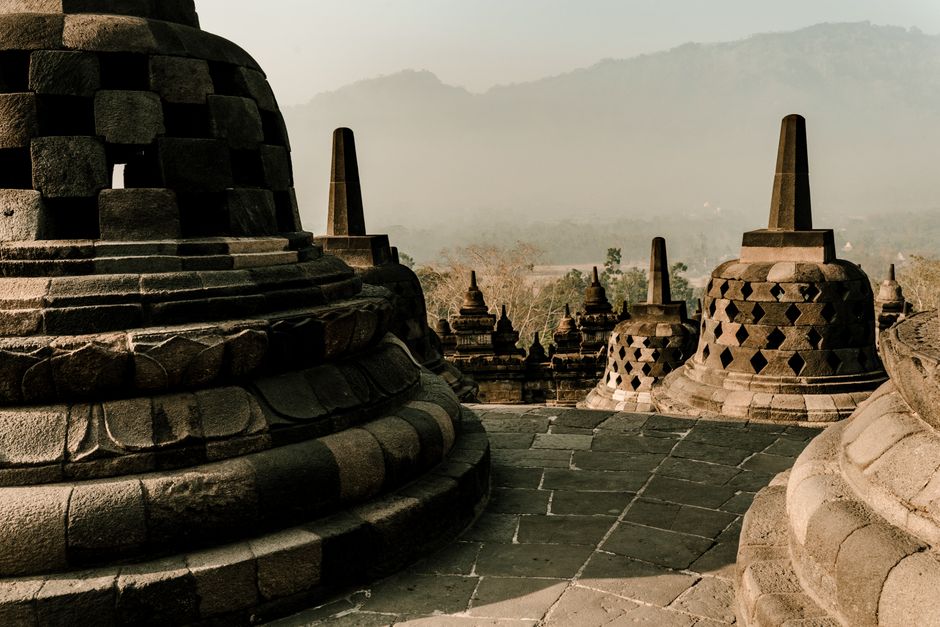
Borobudur at first light is pure geometry and mist. A great stepped pyramid rises from rice fields and volcanoes float on the horizon. Then the sun touches the top stupa and the whole hill seems to breathe. UNESCO listed the Borobudur Temple Compounds in 1991 as one of the greatest Buddhist monuments in the world.
A little history helps you climb with meaning. The monument was built in the eighth and ninth centuries during the Syailendra Dynasty in the Kedu Valley of Central Java. It is a stupa in three tiers around a natural hill, with a base of five square terraces, a trunk of three circular platforms, and a monumental stupa at the summit. Walls carry fine low reliefs over about 2500 square metres, and 72 openwork stupas ring the upper platforms, each holding a Buddha. Mendut and Pawon temples stand east on one axis. The temple was later abandoned and restored with UNESCO help in the 1970s.
Getting there: base in Yogyakarta, the student city of Java. Fly Delhi or Mumbai to Yogyakarta via Kuala Lumpur or Jakarta, often roughly ₹25,000 to ₹45,000 return in shoulder season, so check current prices. Land at Yogyakarta International airport, code YIA, then take the airport train to Tugu station. From Tugu or Jombor terminal take the bus toward Borobudur for roughly 30000 to 60000 rupiah. The temple gate is about 40 km northwest of the city.
What it costs: Yogyakarta is famously cheap for students. A dorm near Prawirotaman costs roughly 100000 to 200000 rupiah, which is roughly ₹550 to ₹1,100 at recent rates. A clean private room with breakfast is roughly 250000 to 500000 rupiah. Gudeg, nasi goreng, soto and angkringan snacks cost roughly 20000 to 60000 rupiah per meal. Borobudur structure tickets for foreign visitors are tiered and sunrise access costs extra, often roughly 500000 to 750000 rupiah, so check the official park site for current zones. Plan roughly 600000 to 1000000 rupiah per day, which is roughly ₹3,300 to ₹5,500.
When to go: aim for April to October dry season when sunrise views are clearest and paths are dry. May and September balance crowds, prices and light. June to August is peak domestic season, so book temple entry and trains early. November to March brings rain and lush fields, with moody photos but slippery steps. Whatever the month, start at opening to enjoy cool stone and quiet corridors.
Stay safe: stone steps are steep and smooth, so wear grippy shoes and carry water and a hat. Do not touch reliefs or sit on stupas, since oils and weight damage old stone. For visas, Indian passport holders have often used short visa free entry or visa on arrival depending on current policy, with visa on arrival fees often around 500000 rupiah for 30 days, which is roughly ₹2,700 so check current rules on the official immigration portal before you fly. Keep your passport and return ticket handy.
Day one sketch for Yogyakarta plus sunset. Spend morning one at the Kraton palace area, Taman Sari and Malioboro for batik window shopping. After lunch ride to Borobudur for the afternoon ticket, walking the square terraces slowly to read reliefs. Climb to the circular platforms for late light and volcano views. Return to the city for gudeg and an early night before dawn.
Day two and three sketch for sunrise and villages. Book the early morning structure climb for day two where offered, since numbers are limited. After descent, visit Mendut and Pawon temples by bike to complete the axis. In the afternoon explore Candirejo village by bicycle for snacks and rice field paths. On day three add Prambanan temples by train plus city bus, or Merapi viewpoints from a safe distance.
Culture and etiquette shape a good visit. Dress modestly over shoulders and knees at temples and follow one way flows on narrow stairs. At busy times give way and avoid blocking relief panels for long photo sets. Bargain gently at stalls and pay the agreed becak price with a smile. If monks are present, ask before photographing. Leave no litter on terraces and carry trash back to bins.
For foreign readers: carry your passport and keep entry stamps and visa receipts together for hotel and park checks. ATMs are easy in Yogyakarta but thin near the monument, so withdraw before you ride out. A little Bahasa goes far, with greetings like selamat pagi and terima kasih opening doors. Save offline maps because village lanes confuse apps.
Borobudur rewards slow feet and quiet eyes. Read a few reliefs well instead of racing all levels and sit once with the wind on the top terrace. Students who plan entry quotas early, ride bikes between temples, and eat where students eat will spend little and learn a lot. Come for sunrise and leave the hill cleaner than you found it.