
Ellora's Kailasa: The Temple Carved Top-Down From One Rock
Youth Travel India ·
Ellora on a student budget: Kailasa Temple, Buddhist and Jain caves, plus a smart day trip from Aurangabad.
→ Our Ellora Caves destination guide: costs, itinerary and hacks
Ellora feels less like caves and more like a two km library cut in basalt, where Buddhist, Hindu and Jain makers worked from the 6th to 10th centuries. The star is Cave 16, Kailasa Temple, a full shrine carved down from one cliff, not built up with blocks. You can see highlights in half a day from Aurangabad for little money if you start early and mind the Monday closure.
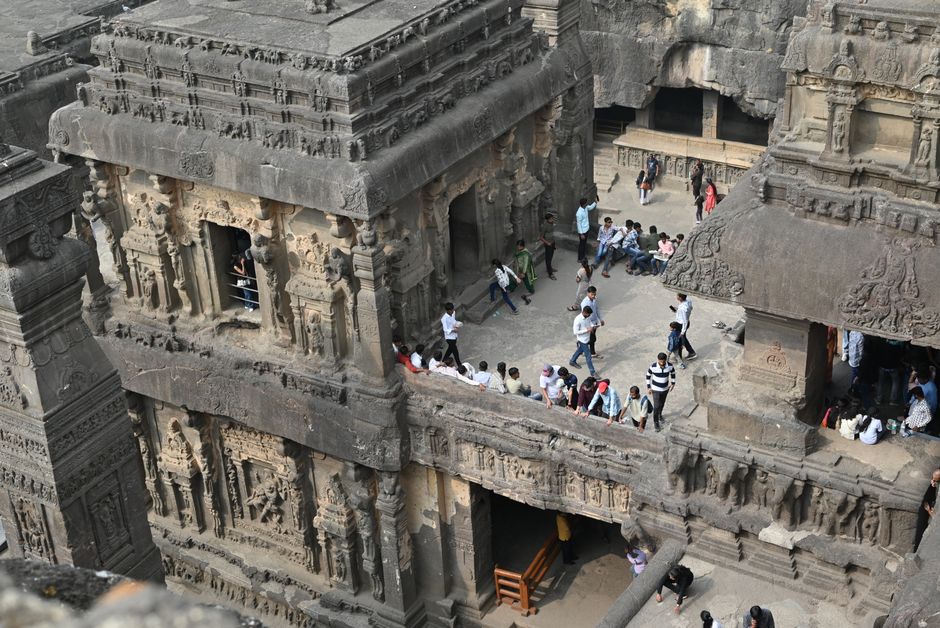
Ellora holds 34 open caves in a row. Caves 1 to 12 are Buddhist homes from 600 to 800. Caves 13 to 29 are Hindu shrines from 600 to 900. Caves 30 to 34 are Jain shrines from 800 to 1000. Kailasa is linked mainly to Rashtrakuta King Krishna the First, ruling 756 to 773, with later detail added. Makers cut three deep trenches, freed a huge block, then carved top down so the tower came first. About 200000 tonnes of rock went out. UNESCO listed Ellora in 1983.
Getting there: Ellora sits 30 km from Aurangabad, now called Chhatrapati Sambhajinagar, your base. MSRTC buses leave Central Bus Stand each 30 minutes and take 45 minutes for roughly ₹50 to ₹100. Shared autos cost more but suit groups. Aurangabad Junction links to Mumbai, Delhi and Pune by sleepers. The airport is 35 km away with flights from Mumbai and Delhi, then taxi or bus. From Ellora stop walk to the gate.
What it costs: plan roughly ₹900 to ₹1,400 per day from Aurangabad. A dorm or budget hotel costs roughly ₹500 to ₹800. Marathi thali, misal and chai cost roughly ₹150 to ₹300 daily. Return bus fare costs roughly ₹100 to ₹200. The ASI ticket is ASI listed at ₹40 for Indian visitors and ₹600 for foreign visitors for all 34 caves, free below 15 years. A licensed guide is roughly ₹500 to ₹1,000 split, a booklet far less.
When to go: October to March is best, with November to February cool for cliff walks. Hours run 6 morning to 6 evening, closed Monday, so time your trip. Reach at opening for soft light before buses. April to June is hot as basalt throws heat, so bring a cap and two litres of water. July to September brings green hills but slick steps. Winter mist can make the court feel unreal.
Stay safe: no permit is needed for Indian visitors. Buy at the ASI counter or online and keep the ticket for checks. Student ID norms shift often, so carry college ID but expect no extra cut beyond the low ASI listed rate. Keep to marked paths and mind rock stairs. Monkeys grab food, so pack it away. Carry water as stalls thin out ahead. Grishneshwar temple nearby has its own queue and rules.
Reading the stones: start at Kailasa as a hill turned to temple. From the gate gaze down the U shaped court, near 50 metres deep and 30 metres high. Note the lone Nandi hall joined by a rock bridge and tall pillars. Base elephants seem to lift the hill. Find Ravana lifting Kailasa and epic panels inside. In Cave 10 note the vaulted hall. In Cave 32 note the lotus roof and calm figures. Paint traces live on if you look close.
A simple two-day sketch: on day one leave Aurangabad by 7 morning and head straight to Cave 16 in low light. Give Kailasa two full hours with the upper view showing the top down cut. Then walk south to Caves 10 and 12 for cells and hall. Lunch near the gate. Afternoon cover Caves 15, 21 and 29 for panels. Return for Bibi ka Maqbara at sunset and street food. Rest early since Ajanta needs its own day.
On day two revisit the north Jain set, Caves 30 to 34, skipped by rushed groups. They sit 1 km from Kailasa, reached by foot or shuttle. Spend two hours on pillars and detail, then see Kailasa again since second looks show more. Stop at Grishneshwar if you wish with modest dress. Bus back for bazaar and a night train. This slow pace beats adding the fort same day.
Etiquette for foreign friends: cover shoulders and knees since Kailasa is a live Shiva shrine too. Remove shoes where asked and never touch carvings since oil harms rock. Ask before shooting worshippers and keep calm in halls. Most use an Indian e Visa or tourist visa gained before travel. Carry your passport with a copy apart. Flash limits apply in painted caves, so heed ASI boards and shun drones sans leave.
Student hacks help. Monday closure is strict, so check before bus booking. Start at Cave 16 first, reverse of most crowds. Share a guide for Kailasa only, then use a booklet. Fill two bottles at base and wear grip shoes on slick rock. Pair Ellora with Bibi ka Maqbara for a budget weekend sans hotel shift. Evening buses crowd up, so keep time spare.
Kailasa flips how you view building. One hill hid a temple and makers freed it by removal. Stand above at close and watch shade fill the court. For bus and ticket news, the linked Ellora Caves destination guide has practical details for the trip.