
First Breath Underwater: Learning to Dive in Havelock
Youth Travel India ·
Try diving or get certified in Havelock with honest costs, ferries and calm season tips.
→ Our Havelock Island destination guide: costs, itinerary and hacks
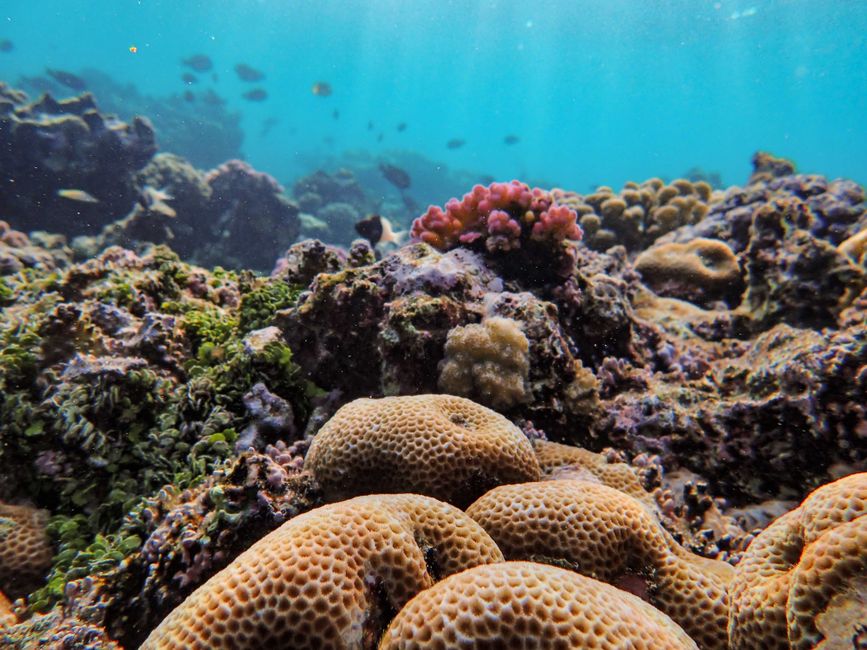
Your first breath underwater feels odd then deeply calm. The regulator hisses, surface noise fades, and snappers part around coral while your instructor stays at your side. Havelock, now called Swaraj Dweep, is kind to beginners since water is warm and clear, training reefs are shallow, and shops run small groups with patient briefings. You need no athletic past here, only curiosity and a free half day.
Getting there: all trips start at Port Blair, now called Sri Vijaya Puram. Flights from Delhi cost roughly ₹7,000 to ₹12,000 one way, with cheaper options often from Chennai and Kolkata. From Phoenix Bay jetty the government ferry costs roughly ₹300 to ₹500 for two to three hours, while private catamarans cost roughly ₹1,500 to ₹2,500 for about one and a half hours. Government boats are the student pick but sell out, so book at the counter a day ahead. Cycles cost roughly ₹200 a day and scooters roughly ₹400 to ₹500.
What it costs: in the 2025 to 2026 seasons Discover Scuba costs roughly ₹5,500 to ₹6,500 for shore and roughly ₹6,500 to ₹7,500 for boat, with two dive combos near ₹9,999 to ₹11,500. Full Open Water costs roughly ₹25,000 to ₹35,000 for three to four days, while private courses cost roughly ₹41,000 to ₹46,950. Prices add 18 percent GST and photos add about ₹2,500. Dorms cost roughly ₹500 to ₹1,200 and meals roughly ₹200 to ₹500 a day.
Discover Scuba versus Open Water is the key choice. Discover Scuba is about three hours with briefing and one dive to about 12 metres, with no licence needed. Open Water is a lifelong licence over three to four days with theory plus four dives to 18 metres, and minimum age near 10 years for both. Reefs like Nemo Reef, Aquarium, Lighthouse, Turtle Beach and The Wall hold coral, turtles and rays. Try dive skills can count toward Open Water within twelve months.
When to go: season is October to May, best November to May for visibility. December to February brings sun and calm seas but higher prices, March to May is warmer and quieter, and October and November are shoulder months with possible swell but fine windows. Avoid June to October when seas turn rough, ferries cancel, visibility falls and many shops shut. New moon nights December to April suit bioluminescence kayaking. Book courses one to two weeks ahead for peak weekends.
Stay safe: insist on a licensed PADI or SSI centre with certified instructors, serviced regulators and BCDs, a medical form, clear teaching on equalising and signals, ratios near one to four students, and a boat with oxygen and first aid. Never hold breath on ascent, stay with buddy and instructor, and respect no fly limits near 18 to 24 hours before flights. Rough sea bans are absolute. Walk away if screening is skipped, if you are pushed to dive with cold or ear pain, if no briefing happens, or if cheap beach intros lack boat cover.
Who should pause needs care. You should float comfortably, though lap skill is not needed for a try dive. Cold, blocked sinuses, ear infection, recent surgery, heart or lung disease, asthma, epilepsy and pregnancy mean postpone and seek clearance. Minimum age is about 10 years with parent consent and calm mind. If masks make you anxious, start with snorkelling at Elephant Beach for roughly ₹1,500 to ₹3,000 including transfers before paying for a course. Declare anxiety and medicines.
A sample three-day sketch suits most students. Day one, morning ferry to Havelock, hostel check in near jetty, cycle rental, swim at Radhanagar in marked zones and sunset. Day two, morning try dive or course day one with briefing and shallow training, afternoon rest and theory, night kayak if moon is dark. Day three, early boat dives, log dives, return gear, afternoon ferry to Port Blair with buffer for delay. For full Open Water keep four nights since day four ends near noon and you should not rush to the airport.
Mind the reef while you enjoy it. Coral grows slowly and fins can smash years of growth in seconds. Learn buoyancy, keep fins up, never touch or stand on coral, do not chase turtles or feed fish, and bring wrappers back. Use reef safe sunscreen and reusable bottles and refuse single-use plastics at shacks. Crowded sites suffer without limits, a point our source book makes with mountain cases. Pick small groups and operators who teach reef care not just photos. Leave no trace works underwater too.
For foreign readers: Havelock is relaxed and welcoming. Carry passport with valid India visa and keep digital copies, since hotels and dive centres log ID and ferries match tickets to names. E visas cover tourism and short courses, not work. Dress modestly in villages away from sand, ask before portraits, avoid alcohol before dives, and respect hut quiet at night. The jetty ATM often runs dry, so bring enough rupees from Port Blair. Patience in ferry lines helps.
Practical notes save money and stress. Sleep near the jetty for shop access and cycle to beaches before crowds arrive after 10 in the morning. Compare shops on instructor ratio and boat dives included, not headline price, and confirm GST, e learning, gear and certification coverage. Eat light before dives, hydrate, skip alcohol the night before, and pack quick-dry clothes and sandals. Start on land with a snorkel and beach swim first.
Our source book frames this calmly. The author urges newcomers to start with guided low risk formats where hazard is real but managed through guides and briefings and gear and protocol. Soft guided products grow access safely, and Havelock diving is a fine case when you pick the grade that fits you.
Route craft, safety thinking and expedition notes in this guide draw on Dr Satinder Singh Malik's Adventure Tourism in India.