
Luang Prabang: Alms, Waterfalls & Slow Laos
Youth Travel India ·
Slow Laos on a student budget: alms etiquette, Kuang Si falls, visas and a three-day plan.
Luang Prabang is the town Southeast Asia goes to when it needs to breathe. French colonial shophouses line lanes of frangipani and temple gold, monks file silently at dawn for alms, and the Mekong slides past it all without hurry. The whole town is a UNESCO World Heritage listing dating to 1995, honoured for the fusion of Lao and colonial architecture, yet it never feels like a museum. Students arrive for two days and stay for five, slowed by waterfalls, night markets, and the cheapest good coffee in the region.
Getting there and around is part of the adventure. Many students arrive on the Laos China Railway from Vientiane or Vang Vieng, with modern trains taking a couple of hours for fares in the low hundreds of thousands of kip, roughly LAK 150,000 to LAK 350,000 or about ₹600 to ₹1,400 depending on class, though you should check current fares when booking. Inside town walk everywhere, rent a bicycle for roughly LAK 40,000 to LAK 60,000 a day, and share tuk tuks to the waterfalls, agreeing the round-trip price before boarding.
What it costs per day keeps Laos the cheapest stop in this guide series. A hostel dorm typically runs roughly LAK 100,000 to LAK 250,000 a night, or about ₹400 to ₹1,000, with riverside guesthouses only slightly more. Noodle soups, baguette sandwiches from the French legacy, and night-market buffet plates cost tens of thousands of kip each, fruit shakes barely register, and Beerlao at sunset is cheaper than water in some cities. Add bike rental, temple donations, and waterfall entries, and many students spend roughly LAK 400,000 to LAK 800,000 a day all in, or about ₹1,600 to ₹3,200. Check the current exchange rate when you plan since the kip moves.
When to go is a dry-versus-green choice. October to February brings cool dry days, full waterfalls, and peak-season beds, with December mornings chilly enough for a jacket. March to May turns hot and hazy with field-burning smoke that dulls the mountain views, though prices drop. June to September is the green monsoon with dramatic falls, muddy trails, and the cheapest rooms.
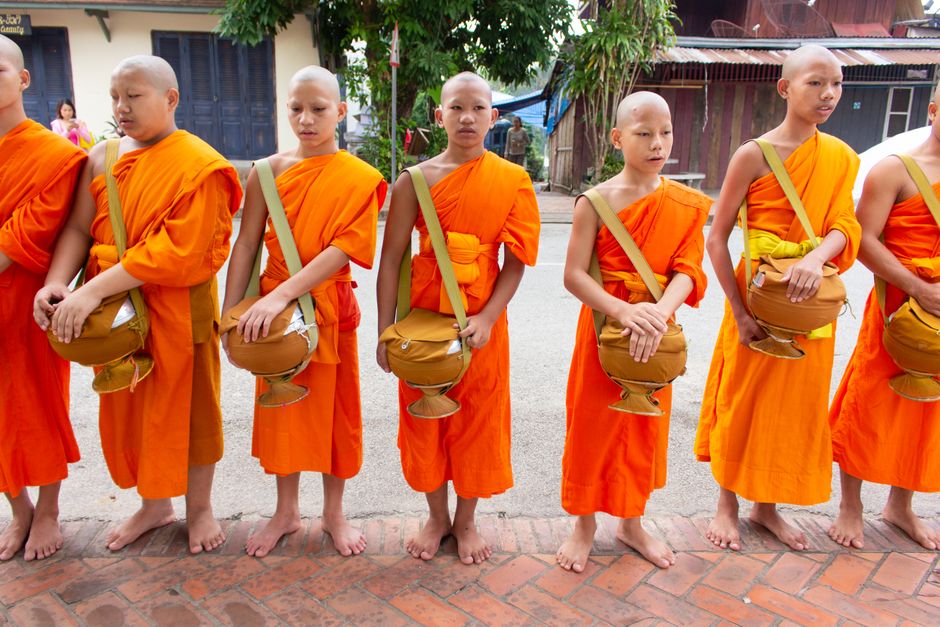
The dawn alms ceremony is the soul of the town and demands respectful behaviour. Hundreds of monks walk the main streets collecting sticky rice shortly after sunrise, and visitors may observe quietly from across the street without blocking the line. Do not touch monks, step into the procession for selfies, or buy pre-packaged tourist alms from touts, and keep voices and camera flashes off. The town has asked tourists for years to stop turning a sacred rite into a show, so be the visitor who listens.
Temples and the palace fill the daylight hours gently. Wat Xieng Thong, the sixteenth-century jewel with its sweeping roofs and tree-of-life mosaic, charges a small entry in the tens of thousands of kip and deserves an unhurried hour. The Royal Palace Museum closes midday and bans photography inside, so plan around its hours. Climb Mount Phousi's three hundred steps for sunset, arriving early since the hilltop crowds thicken, with a modest entry fee.
Kuang Si Falls is the essential half day and the easiest shared trip to join. Turquoise tiers cascade through jungle to swimming pools, with a bear rescue centre near the entrance included in the same ticket. Entry costs roughly LAK 20,000 to LAK 60,000, or about ₹80 to ₹250, with shared tuk tuk transport split between travellers adding a similar amount each, but confirm current prices locally. Bring swimwear, walk to the top pools for quieter water, and pack out all rubbish.
Stay safe by slowing down rather than gearing up. The Mekong looks swimmable and is not, with currents and boat traffic, so swim only at the falls pools and hotel pools. Mosquitoes carry dengue, so use repellent, cover up at dusk, and sleep under nets where provided. Roads to the falls are winding, so hire drivers with helmets provided and skip night riding. Stomach bugs visit the careless, so eat where turnover is high, peel fruit, and carry rehydration salts.
A three-day sketch honours slow Laos. Day one is temples and town: alms observation, Wat Xieng Thong, palace museum, Phousi sunset, night market dinner. Day two is Kuang Si morning to afternoon plus a Mekong sunset cruise with drinks aboard. Day three is bicycles and crafts: morning market, paper and textile villages across the river by small ferry, coffee work session, farewell barbecue.
Foreign readers should absorb Lao gentleness. Greet with a nop prayer-like bow for elders and monks, dress modestly at temples with covered shoulders and knees, and remove shoes where others do. Never touch anyone's head, point feet at Buddhas, or raise your voice in public, since calm is a social value here. Bargaining is soft and brief, tipping is small but welcome, and public affection stays discreet. Carry your passport, since railway bookings and some checkpoints need the original.
Papers are straightforward. Laos offers an official eVisa through its foreign ministry portal for many nationalities including Indians, with applications processed in about three working days and a non-refundable fee that varies by nationality, so calculate your exact fee on the official site before paying. Visa on arrival exists at major ports but queues grow in peak season, and eVisa holders use dedicated lanes at designated crossings, so check your entry point qualifies. Apply at least two weeks ahead and print the approval letter.
Luang Prabang teaches the rarest travel skill, which is doing less. Watch the alms, swim the falls, drink the coffee, and let slow Laos reset a pace the rest of the trip will thank you for.