Okavango by Mokoro: Botswana's Delta, Simply
Youth Travel India ·
Okavango Delta simply with mokoro trips Maun stays costs seasons permits and budget safari choices.
The Okavango Delta is a river that never reaches the sea. Instead it spills into the Kalahari sand, making a green maze of channels, lagoons and islands. Gliding in a mokoro, a slim dugout canoe poled by a guide, feels silent and ancient, with elephants drinking upstream and kingfishers darting past. It sounds expensive, but a simple base in Maun plus a community-run mokoro day keeps the dream within a student's reach.
Getting there: fly from India to Johannesburg, then on to Maun (MUB), the delta's gateway. From Maun, a shared taxi or lodge shuttle takes you to the polers' stations at Boro, or to Sepupa for cheaper community trips. Return fares from India to Johannesburg often run ₹45,000 to ₹70,000 booked early, plus the regional hop to Maun at roughly US$150 to US$280 (about ₹13,000 to ₹24,000). Book that flight early, because seats are few and prices climb fast.
What it costs: plan roughly ₹6,000 to ₹10,000 a day if you stay at camps in Maun and cook often. A tent pitch or dorm bed costs roughly US$15 to US$30 (about ₹1,300 to ₹2,600), and a basic lodge room US$50 to US$90. Self-cooked meals cost roughly US$8 to US$14, restaurant plates US$12 to US$22. A community mokoro day trip costs roughly US$60 to US$110 (about ₹5,200 to ₹9,500), including park fees and lunch, so treat it as your main splurge.
When to go: June to August is the sweet spot. The flood arrives in the dry season, so the mokoro channels are full just as wildlife gathers around the water, a rhythm UNESCO singles out as the delta's signature. May and September are good shoulder months with easier lodging rates. Avoid the heavy rains of November to March, when some tracks flood and mosquitoes multiply, and December, when camps charge festive peak rates.
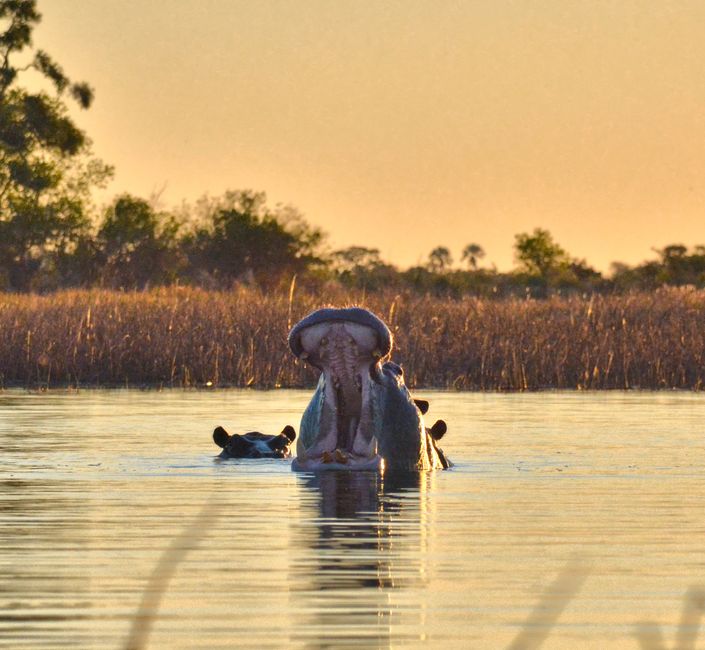
Stay safe: the delta is home to elephants, hippos, crocodiles, lions and wild dogs, so always follow your poler, stay seated in the mokoro and keep your arms inside. Camp only at fenced or guided sites and store food securely. Take malaria prophylaxis on medical advice, with repellent and a net. Many Indian passport holders need a Botswana visa before travel, so check the current immigration rules, carry proof of onward travel and keep a yellow fever certificate if you transit through other African countries.
Your three-day sketch starts in Maun with preparation and a sunset. Check into a riverside camp and rent a mosquito net if one is not included. Visit the market for snacks and water, and confirm your mokoro pickup time and whether park fees are included. An evening river cruise or short bird walk settles you into delta pace. Eat early and pack sun cover and a dry bag for the next day.
On day two, take the full mokoro day. Transfer by road, then pole deep into quiet channels while your guide points out frogs, herons and perhaps a fish eagle. Step onto an island for a guided walk, looking for tracks, dung and grazing antelope from a respectful distance. Eat a packed lunch in the shade, then pole back as the light turns gold, and return to Maun dusty, calm and full of stories.
On day three, choose a light extra or rest. Join a short game drive on the delta's eastern fringe, visit a cultural village for basket-weaving stories, or simply cycle around Maun along the Thamalakane River. If the budget allows, a 45-minute scenic flight costs roughly US$120 to US$180 a seat, cheaper when you fill the plane with friends. Catch an afternoon bus toward Nata or Kasane if you are travelling on.
Sleep and eat smart and the delta stays kind to your wallet. Camps in Maun often have kitchens, pools and trip boards for sharing transfers. Cook pasta, eggs and local greens twice, and eat out once at a riverside café. Carry at least two litres of water, sunscreen and a wide hat, because the glare off the water burns fast. Ask at reception for community trusts that run mokoro trips, so more of your money stays local.
The Okavango is one of very few large inland deltas with no outlet to the sea, and its wetland system is almost intact, which is why UNESCO lists it. That intact plumbing supports cheetah, both white and black rhino, wild dog and lion, alongside more than 400 bird species. Your guide reads the water like a map and knows where channels open and close with the flood. Listen more than you click and you will notice tiny painted reed frogs and wide elephant highways in the same hour.
For foreign readers: villages around the delta value calm greetings and modest dress, so ask before taking photos and cover your shoulders in settlements. Never feed animals, and keep quiet in the mokoro, because sound carries far over water. Keep passport and visa copies on your phone and the originals locked away, and carry pula in cash for small fees, because cards can fail. Many European and North American visitors get short visa-free stays, and Indian students should also check South African transit rules. With gentle habits, the delta gives you pure wild quiet.