
Sandakphu: Four 8,000m Giants From One Ridge
Youth Travel India ·
Four eight thousand metre giants from one ridge on a student budget, with seasons, costs and a calm six-day plan.
→ Our Sandakphu destination guide: costs, itinerary and hacks
→ The Sandakphu route map: camps, passes and elevation
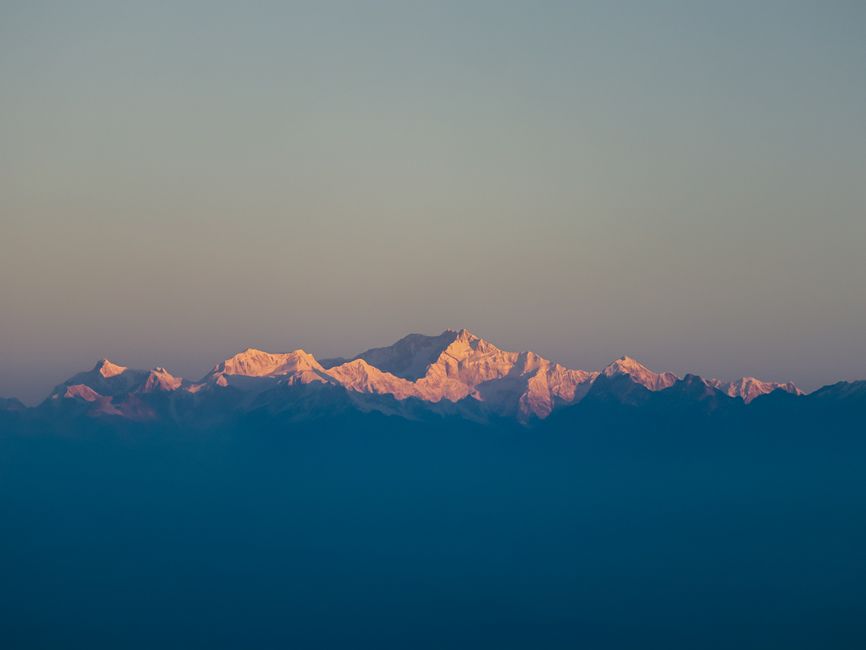
Standing on Sandakphu ridge at sunrise feels unreal for a first-timer. At about 3636 metres, the highest point in West Bengal, you watch the Sleeping Buddha take shape. Everest and Lhotse and Makalu and Kanchenjunga line up as one wall of 8000 metre giants. No other short trek shows four highest peaks from one place. The trail follows the Singalila Ridge along the India and Nepal border through bamboo and rhododendron forest. It is gentle enough for fit beginners and cheap enough for students.
Getting there: use New Jalpaiguri railhead and Bagdogra airport as gateways, with Siliguri linking onward routes. Overnight trains from Delhi and Kolkata reach New Jalpaiguri, with sleeper fares roughly ₹500 to ₹800. Shared jeeps run to Darjeeling for roughly ₹300 to ₹500. From Darjeeling take a shared jeep to Manebhanjan for roughly ₹100 to ₹200. Stay a night in Darjeeling to settle at about 2000 metres before you climb higher. Confirm live timings on train apps before booking.
What it costs: Sandakphu stays cheap if you walk in a small group. Tea house beds cost roughly ₹500 to ₹800 per night and simple meals cost roughly ₹300 to ₹500 per day. A local guide costs roughly ₹1,000 to ₹2,000 per day, shared among three or four friends. Park entry is roughly ₹100 to ₹200 for Indian trekkers and about ₹500 for foreign trekkers. Guided packages run roughly ₹12,000 to ₹16,000 while independent treks total roughly ₹8,000 to ₹13,000. These ranges reflect the 2025 to 2026 season.
When to go: plan for October to December for the clearest skies and sharpest views of Everest and Kanchenjunga. October and November are the classic view months, with cold nights near minus 5 degrees and bright golden days. March to May brings red and pink rhododendron bloom across the ridge and pleasant days near 10 to 15 degrees. Avoid June to September, when monsoon clouds close views and trails turn slippery with leeches and landslides. January and February bring snow and deep cold near minus 10 degrees.
Stay safe: altitude here is moderate but real, so respect it from day one. At almost 3600 metres headaches and nausea can appear, especially if you rush up from the plains. Walk slow, drink plenty of water, avoid alcohol for the first two days, and keep one easy day at Tumling before higher camps. Build fitness with daily brisk walks and stairs for three to four weeks before the trek, since you will walk 5 to 7 hours on longer days. Take travel insurance that clearly names trekking up to 4000 metres. Register at Manebhanjan check post with photo identity and passport size photos.
A day by day sketch: keep six days relaxed with room for weather and views. Day one is arrival from New Jalpaiguri to Darjeeling to Manebhanjan, with permits and a short evening walk. Day two walks from Manebhanjan to Tumling through forest and border villages in about 5 hours, with first views of Kanchenjunga if skies stay clear. Day three continues from Tumling to Kalipokhri past Gairibas, a longer day of about 6 hours on rolling ridge path. Sleep early and keep bottles filled.
Day four climbs from Kalipokhri to Sandakphu in about 4 hours, reaching in time for sunset over the Sleeping Buddha. Day five is for sunrise at the viewpoint and an optional walk toward Phalut at about 3600 metres for wider panoramas, then descent to Gairibas or Tumling. Day six returns to Manebhanjan and on to Darjeeling for a hot meal and a proper bed. If knees feel sore, shared Land Rover rides run on parts of the ridge for roughly ₹4,000 to ₹6,000 per vehicle, useful as backup but far less memorable than walking.
Leave no trace: this ridge survives because trekkers treat it as a living park, not a backdrop. Singalila is a national park with red panda habitat and fragile alpine meadow, and crowds can wear it down fast. Carry back all wrappers and tissue and bottles to Manebhanjan, refuse single-use plastic where you can, refill from filtered water at tea houses, and stay on marked paths. Use toilets at tea houses, keep noise low at night, and burn nothing except what hosts provide. A clean trail keeps permits easy for the next group.
A note for foreign readers: you are welcome on this border ridge, and the culture is gentle if you meet it with care. Walk clockwise around shrines, ask before photographing people and monks, dress modestly in villages and monasteries, and greet hosts politely before settling into tea houses. Carry your passport and a copy of your Indian visa on your phone, plus passport size photos for park registration. Enter India on an electronic visa arranged before flying, and confirm insurance covers trekking at altitude. English works in Darjeeling and Manebhanjan.
This trek teaches the core lessons of Himalayan travel in a kind way. Mountains give slow and clear feedback for small mistakes, so a guided ridge walk is the right first step before faster water or air sports. Managed risk matters more than low price, so judge an operator by briefings and gear and pacing, not by discounts. A good guide holds the balance between challenge and skill, keeping you in flow and out of trouble, and if a briefing is skipped you should walk away. Choosing village tea houses keeps money local.
Travel with three or four friends to share guide fees, carry a sleeping bag for cold nights, and book beds for October and November and April. Carry cash from Darjeeling and pack layers for sun and cold. The linked Sandakphu destination guide pairs well with this plan.
Route craft, safety thinking and expedition notes in this guide draw on Dr Satinder Singh Malik's Adventure Tourism in India.