
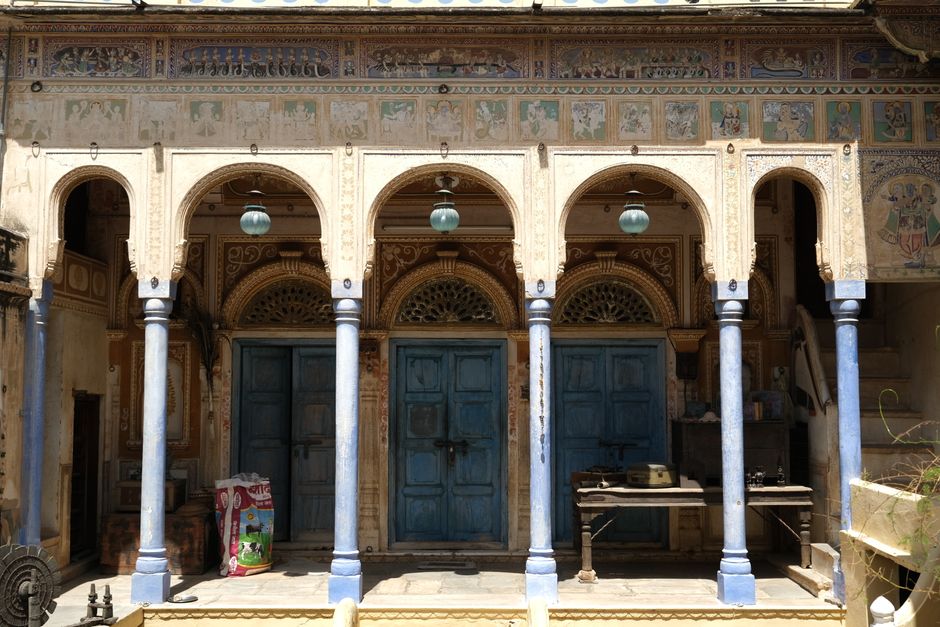
Shekhawati: India's Open-Air Gallery of Painted Havelis
Youth Travel India ·
Shekhawati on a budget: painted havelis of Mandawa, Nawalgarh and Fatehpur plus access and costs.
→ Our Shekhawati destination guide: costs, itinerary and hacks
Shekhawati feels like walking through a giant open air picture book. Every second building wears paintings of gods, elephants, trains and motor cars, even British officers in sola topis. These havelis were built by wealthy Marwari traders in the 18th and 19th centuries when the region sat on rich caravan routes. Today Mandawa plus Nawalgarh plus Fatehpur plus Jhunjhunu plus Churu form a quiet circuit with few crowds. If Jaipur is the blockbuster, Shekhawati is the indie film students love more.
Getting there: base on Jaipur for simplest links. Shekhawati sits roughly 165 to 190 km north of Jaipur, about three and a half to five hours by road by town and traffic. Direct buses from Jaipur to Mandawa or Nawalgarh or Jhunjhunu usually cost roughly ₹150 to ₹400. The nearest major railhead is Jhunjhunu Junction about 29 km from Mandawa, with Jaipur trains covering about 155 km in roughly three hours and 45 minutes for roughly ₹170 and above by class. Mukundgarh and Dundlod serve some local trains. Jaipur Airport is nearest. From Jhunjhunu take a local bus or shared jeep to Mandawa in about an hour, then use buses or bicycles between towns.
What it costs: Shekhawati is among the cheapest heritage zones in Rajasthan. Simple hotels and haveli guesthouses usually cost roughly ₹500 to ₹800, with converted havelis around ₹600 to ₹1,000 in season. Thali, dal baati, churma, kachori and chai usually total roughly ₹150 to ₹300 per day. Haveli entries are tiny, often roughly ₹20 to ₹50 per house, and Podar Haveli Museum in Nawalgarh is around ₹50. Local buses and shared jeeps are cheap while bicycle rental in Mandawa is often around ₹100 to ₹200 per day. A comfortable student day often lands around ₹900 to ₹1,400 with stay, food, transport and several entries.
When to go: aim for October to March when days are mild and light suits fresco photography. November to February is most pleasant with cool mornings for walking. February sometimes brings the Shekhawati Festival with folk music, worth checking before you go. Avoid April to June when desert heat makes midday exploration hard. July to September brings showers that cool air but muddy rural roads. Winter mornings can be foggy, so travel after sunrise and carry a light jacket for open jeep rides.
Mandawa is the best first stop. The town grew as a trading outpost and clusters painted mansions around its fort and bazaar. Chokhani Haveli, Ladia Haveli, Bansidhar Newatia Haveli and Gulab Rai Ladia Haveli show mythological scenes beside trains, cars and gramophones. Mandawa Castle looks grand outside though much now works as a heritage hotel. Walk the bazaar for crafts, step into courtyards where caretakers open painted rooms for a small fee, and look up often because the finest art sits on upper walls and ceilings.
Nawalgarh and Fatehpur deepen the story. Nawalgarh about 30 km from Mandawa holds fine frescoes at Morarka Haveli and the Podar Museum archive that helps you read symbols. Fatehpur adds Singhia Haveli plus Jagannath Singhania Haveli plus stepwells and old caravanserais with wall art. Jhunjhunu as largest town offers Khetri Mahal plus Modi Haveli plus Bihariji Temple plus Tibrewala Haveli. Churu bazaar and mansions reward an extra day. Two towns per day is plenty because heat, dust and visual overload are real.
Slow looking is the skill. Frescoes used natural colours on wet plaster, so sheltered blues and reds still glow. Notice Krishna legends beside steam engines, or floral borders beside soldiers. Ask caretakers for stories since many grew up in these houses. Early morning and late afternoon give softest photo light. Midday suits interiors, museums and long lunches. A bicycle for town lanes plus a shared taxi between towns keeps costs and pollution low.
Here is a simple two to three-day sketch. Day one is arrival in Mandawa from Jaipur by late morning, castle exterior plus nearby havelis afternoon, bazaar walk and rooftop sunset. Day two is Nawalgarh morning with Podar Museum plus Morarka Haveli, then Fatehpur afternoon for more havelis and a stepwell, night in Mandawa or Nawalgarh. Day three if you have it is Jhunjhunu plus Mukundgarh at easy pace, then bus or train back to Jaipur. Do not attempt five towns in one day. Charm lies in lingering.
Stay safe: Shekhawati is calm and safe with far fewer touts than big cities. Many havelis remain private homes, so enter only where entry is offered and pay the fee happily. Public transport thins after evening, so finish town moves by late afternoon. ATMs cluster in larger towns like Jhunjhunu, so carry cash for small towns. Use bottled or filtered water, cap and sunscreen, and watch for uneven steps and low doorways in old houses. Solo travellers including women commonly feel comfortable here.
A note on etiquette for foreign readers: these are heritage homes, not just photo sets. Dress modestly with shoulders and knees covered, remove shoes when asked, and avoid touching fragile plaster. Ask before photographing residents or interiors and accept a polite no gracefully. Bargaining is normal but keep it kind. Carry a passport copy and lock the original at your hotel. Most nationalities use the Indian eVisa arranged online before travel with fees varying by nationality. Student ID can help at museums.
Shekhawati gives Rajasthan without noise. Sleep in a painted haveli, cycle past mustard fields, and read walls like pages. It pairs well with Jaipur for a week long desert loop. For verified fares, season notes and student hacks, our linked Shekhawati destination guide collects practical details in one place.