
Sri Lanka's South Coast: Mirissa to Tangalle
Youth Travel India ·
Whale watching in Mirissa, surf in Weligama and old fort lanes in Galle on an easy student budget.
Sri Lanka south coast packs a lot into a short railway line. From the stilt fishermen of Weligama to blue whale boats in Mirissa, the Dutch fort walls of Galle and the quiet bays near Tangalle, you can move slowly by train and tuk tuk and never feel rushed. Three to four days here feel like a proper beach break without the crowds of Southeast Asia party islands.
Getting there: fly into Colombo Bandaranaike International Airport from Delhi, Mumbai, Chennai or Bengaluru, often for roughly ₹12,000 to 22,000 return in shoulder season if booked early, then take the coast line south. From Colombo Fort station, trains to Galle take roughly three hours and on to Mirissa and Matara in roughly four to five hours, with second class reserved seats often around LKR 500 to 1000, roughly ₹140 to 280, and third class even cheaper. Once on the coast, local buses between Galle, Weligama, Mirissa and Tangalle cost very little and tuk tuks for short hops often cost roughly LKR 300 to 800.
What it costs: plan roughly ₹3,000 to 5,000 per day on a student budget, roughly LKR 11000 to 18000. A dorm bed or simple guesthouse room in Mirissa or Weligama often costs roughly LKR 3000 to 6000 per night, roughly ₹850 to 1,700, with Galle Fort boutique lanes costing more. Always check current prices at the harbour counter.
When to go: the south and west coast is best from November to April when seas are calmer for whales, snorkelling and surf lessons. The Sri Lanka Tourism board notes Mirissa as a key blue whale watching point, with peak sightings often from December to March, though sightings are never guaranteed. Mornings are calmest for boat trips, so book the earliest sailing. Carry rain cover even in season because tropical showers pass quickly.
Stay safe: swim only where locals swim and respect flags, especially at Mirissa and Tangalle where rip currents can be strong outside sheltered corners. Choose whale operators that follow Coast Guard guidance on distance and speed, wear life jackets and avoid boats that chase or crowd whales. Keep your passport, return ticket and hotel address ready at immigration.
Your first day can start in Galle. Walk the seventeenth century fort ramparts at sunrise, visit the lighthouse and Dutch church, then explore low-cost museums and cinnamon shops inside the lanes. Eat rice and curry on a side street outside the Fort for half the price of rampart cafes. Watch stilt fishermen from the road bridge, then settle into a guesthouse near the sandy bay. End with roti and fresh lime juice at a beach shack.
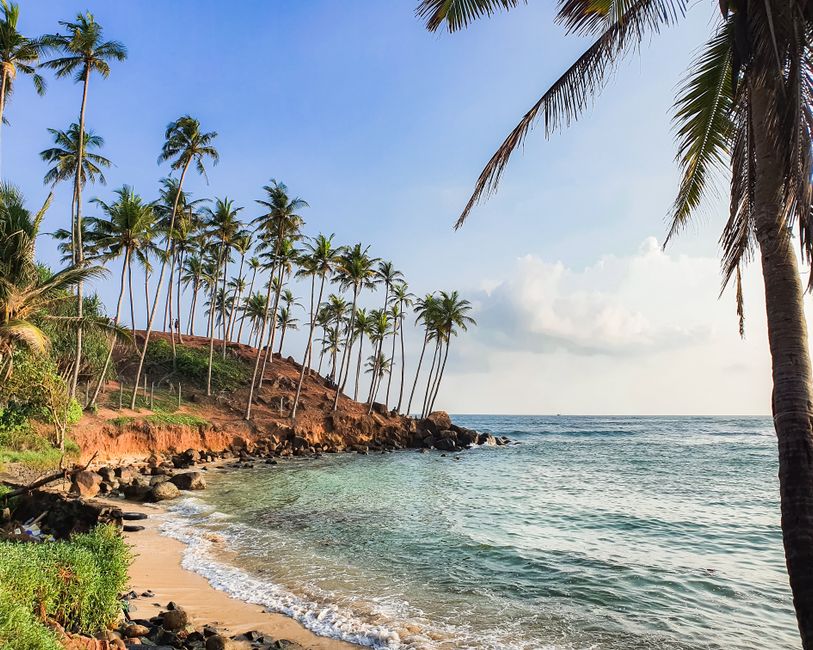
Your second day belongs to Weligama and Mirissa. Take a morning beginner surf lesson at Weligama Bay which is shallow and sandy, ideal for first-timers. After lunch, take a short bus to Mirissa, check Coconut Tree Hill viewpoint for photos, then walk Secret Beach and Parrot Rock at low tide. For dinner try the harbour side grills but agree the price by weight before ordering. If you plan whale watching, confirm your next morning departure and sleep early.
Your third day can be whales plus Tangalle calm. Join the early whale boat from Mirissa harbour around six thirty, carrying water, light snacks and motion sickness tablets if needed. Trips last roughly three to five hours. In the afternoon bus east toward Tangalle for quieter sand at Silent Beach or Rekawa. Rekawa is a turtle nesting beach with night watches in season run under wildlife guidance, so join only with licensed guides and no flash photography.
Saving money is easy on this coast. Travel by train second class, share tuk tuks, eat where bus drivers eat, and drink king coconut water instead of bottled sodas. Many guesthouses offer free breakfast if you stay two nights, so ask politely. Carry small Sri Lankan rupee notes for buses and beach stalls since change is short. ATMs in Galle and Mirissa are reliable, but carry cash toward Tangalle.
Foreign readers and culture notes: Sri Lanka is warm and modest, so change out of swimwear before entering temples and cover shoulders and knees. Remove shoes and hats at temples and the Galle mosque area, and ask before photographing monks or ceremonies. English is widely understood on the south coast. Keep your ETA printout, passport copy and emergency numbers, including the tourism hotline 1912 noted by Sri Lanka Tourism, saved offline.
Packing and logistics help a lot. Bring reef friendly sunscreen, a quick-dry towel, motion sickness tablets, modest temple clothes and a dry bag for boat days. Power plugs are usually type D and G, so carry a universal adapter. Buses do not always stop unless you flag them, so watch for your destination board. Trains can be crowded on weekends, so reserve express seats early.
Food is a highlight for student budgets. Try fish curry, dhal, egg hoppers for breakfast, kottu chopped with vegetables, and buffalo curd with kithul honey near Matara. Vegetarians eat very well here. Drink boiled or bottled water and avoid ice at very small stalls if your stomach is sensitive. Markets in Galle and Matara sell mangoes, pineapples and bananas cheaply in season. A simple cooking guesthouse lets you make noodles and eggs on rest days.
You leave the south coast with salt in your bag and train windows in your memory, green palms on one side and blue sea on the other. With whales, surf and fort lanes in three days you get variety without long transfers. Keep plans flexible for sea conditions, book boats with licensed operators, and check current ETA and train times before you go. This coast rewards slow mornings and early nights.