Yala: Leopards in Sri Lanka's Famous Park
Youth Travel India ·
Yala on a student budget: leopard blocks, jeep and ticket prices, closures, and sharing costs across six seats.
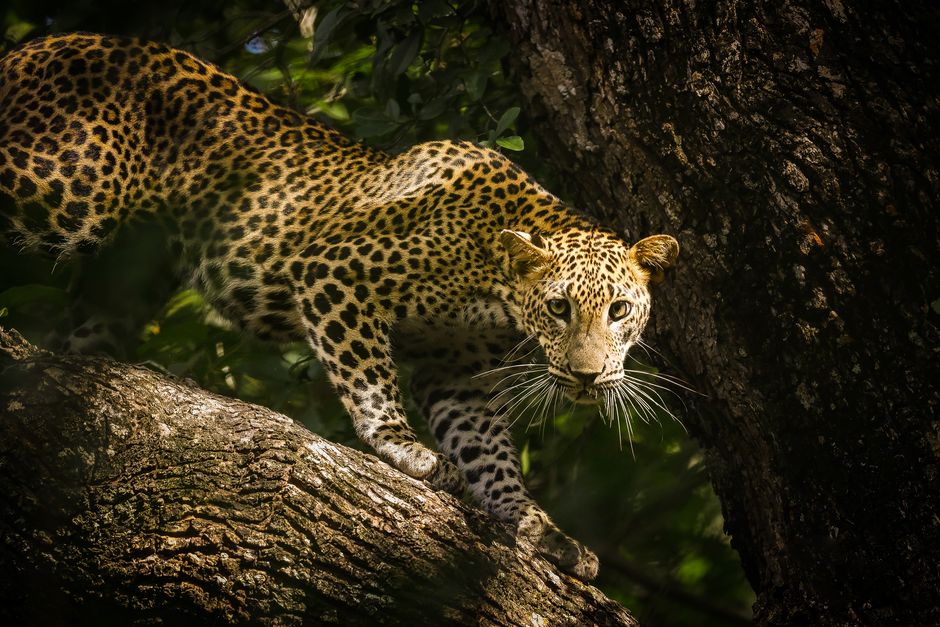
Yala is the park people mean when they say Sri Lanka has the highest leopard density on the planet, and dawn here can feel electric. This vast dry-zone park in the southeast, gazetted back in 1938 and spread over about 378 square miles, mixes scrub jungle, lagoons, dunes and ancient tanks, holding leopards, sloth bears, elephants, crocodiles and clouds of painted storks and peacocks. Block 1 near Palatupana and Katagamuwa is the famous leopard ground, while outer blocks spread the crowds thinner.
Getting there: base in Tissamaharama town, about thirty to forty minutes from the Katagamuwa gate, with guesthouses, jeep operators and bus connections in every direction. From Colombo the drive runs about 260 kilometres and five to six hours, with air-conditioned buses costing roughly LKR 800 to LKR 1,500 (about ₹235 to ₹440) and private transfers far more. Many students combine Yala with the south coast, since Mirissa, Tangalle and Hiriketiya sit a few hours west, or with Ella in the hills to the north. Operators include hotel pickup around Tissa and Kirinda in their jeep rates.
What it costs: split six ways, Yala is very manageable, and the jeep is the unit of maths. A private open Toyota 4x4 for up to six people runs roughly LKR 16,900 to LKR 21,450 for a half day (about ₹5,000 to ₹6,300) and roughly LKR 28,000 to LKR 31,350 for a full day, so a full jeep brings the vehicle share near ₹850 to ₹1,050 per person for a half day. Park entry is separate and set by the wildlife department, with foreign adults near US$25 (about ₹2,200), SAARC adults including Indians near US$20 (about ₹1,760), children lower, plus a service charge near US$10 per group and eighteen percent VAT, all paid in rupees at the gate at the day rate. Check current ticket bands before travelling, since the department revises them.
When to go: February to July offers the strongest wildlife viewing, as water shrinks, animals gather at tanks and the undergrowth thins. November to January brings the monsoon, with lush scenery but dispersed animals and occasional access limits. Block 1 usually closes for several weeks around September to October so the core zone can recover, though dates shift yearly, so check the current wildlife department notice before locking plans. Weekday dawn safaris beat weekends for both animals and vehicle numbers, and the gates open at six sharp.
Stay safe: Indian passport holders get the free thirty-day double-entry ETA under the scheme running since May 2026, arranged online before flying. Never leave the jeep inside the park, keep arms and cameras inside on access roads too, and wear the seatbelt on bumpy tracks. Elephants cross the Tissa to Kataragama road at dawn and dusk, so night rides need an alert driver. Drink two litres through a full-day safari, wear a hat, and use repellent since dengue mosquitoes work days. Save the tourism hotline 1912 for operator trouble and 1990 for medical emergencies.
Travel responsibly with wildlife: insist your driver keeps distance from leopards and never joins a crowding scrum, since a stressed cat simply melts away and everyone loses. No baiting, calling, feeding or off-track driving, all illegal and all harmful, and engines stay low near sightings. Book jeeps with licensed drivers and trackers, whose sharp eyes find you more without harassing anything. Tip generously when your crew behaves well around animals, because money is the fastest teacher. Report reckless driving to the park office or the tourism hotline rather than applauding it.
Sketch for day one: bus or drive down from the coast or Ella, check into a Tissa guesthouse, and spend the afternoon at the Tissamaharama stupa and the lotus-covered lake where fish eagles hunt. Meet your jeep driver in the evening, agree the route, the block, the pickup time and what is included, and get it in a message. Eat rice and curry early and sleep before ten, because the 4.45 alarm is unforgiving.
Sketch for day two and day three: take the dawn half-day into Block 1, entering at six and working the waterholes and rock outcrops while cats are active. Return by eleven for brunch and a nap, then choose an afternoon birding run to Bundala wetlands nearby for flamingos and crocodiles. Day three is your flex, either a full-day deep into outer blocks for sloth bears and elephants or a cultural morning at Kataragama's sacred precinct before rolling on to the coast. Two safari sessions across three days beat one rushed morning.
Filling a jeep: six seats is the magic number, so start recruiting at your hostel the moment you arrive, using noticeboards and breakfast tables. Agree the split before booking, including whether the tracker fee, entry tickets and breakfast packets sit inside the quote. Half days suit first-timers and tight budgets, while full days with a midday break at a rest point inside suit photographers.
Foreign readers: the southeast is devoutly Buddhist and Hindu around Kataragama, so cover shoulders and knees at temples and dagobas, remove shoes and hats, and keep voices low. Never pose with your back to a Buddha image and avoid pointing feet at shrines. Full-moon Poya days run dry, the famous head wobble means yes, and the right hand handles all giving and eating. Modest swimwear only at pools and beaches, never at sacred tanks, and a sarong in your safari bag covers every situation.
Yala on a shared jeep is the subcontinent's great-value big-cat gamble, with leopards as the headline and elephants as the guarantee. Fill all six seats, enter at dawn, keep your distance, and let a good tracker turn rupees into rosettes.