
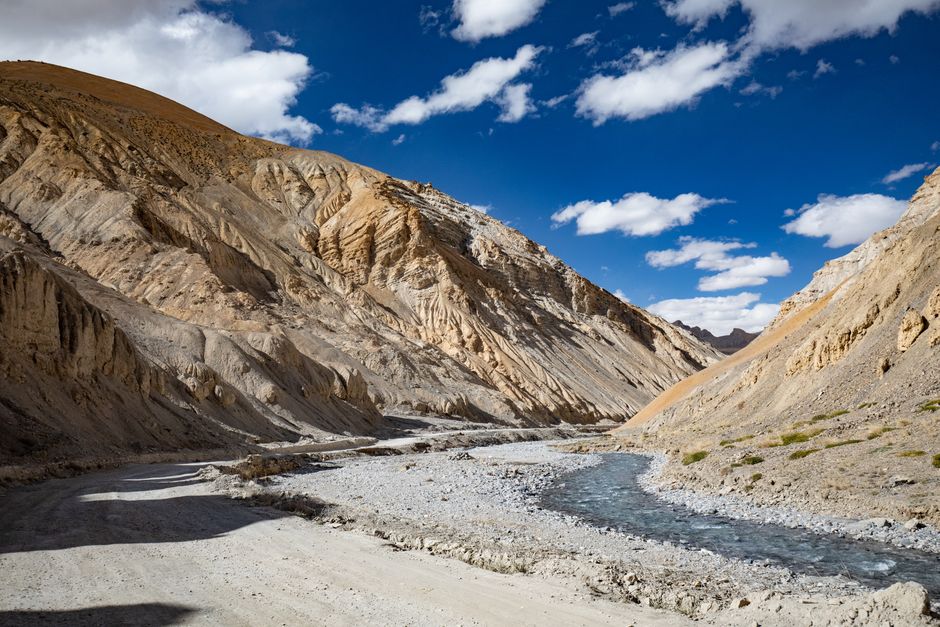
The Himalaya by Cycle: Manali-Leh, Spiti & the Big Dream
Youth Travel India ·
Manali Leh and Spiti by cycle. Rentals, supported tours, fitness and the low impact bike dream.
→ Our Spiti Valley destination guide: costs, itinerary and hacks
There is no closer way to meet the Himalaya than on a cycle. Every climb hurts, every descent pays back, every village arrives at human speed. Manali to Leh and the Spiti loop are the classic Indian tests, high passes, thin air, huge skies. They are hard but possible for fit beginners with support.
The classic routes are simple to picture. Manali to Leh runs about four hundred eighty km over high passes like Rohtang, Baralacha La, Tanglang La and Khardung La if extended, usually done in ten to twelve riding days with rest. The Spiti loop runs from Manali or Shimla through Kinnaur to Kaza and back over Kunzum La, shorter daily distances but rough roads and long water crossings. Fit riders often add Khardung La as a day trip from Leh.
Getting there: take an overnight train from Delhi to Chandigarh or Kalka, then a bus to Manali, with train sleeper fares roughly ₹300 to ₹500 and buses to Manali roughly ₹600 to ₹1,000. Carry your cycle by train luggage or bus roof only with padding and prior permission. Many students rent in Manali or Leh instead. For Spiti, buses run from Shimla and Manali to Reckong Peo and Kaza in season.
What it costs: rentals for decent mountain bikes in Manali and Leh are often quoted around ₹900 per day, with day trip machines up to around ₹1,800 per day. Supported Manali to Leh group tours of about ten days are often listed around ₹48,000 per person, with cycle rent extra around ₹10,000 to ₹12,000 for the tour. Day downhill trips like Khardung La are listed around ₹9,000 for one person with backup.
When to go: mid-June to September is the window, when Rohtang, Kunzum La and Baralacha La are open and camps run. July and August bring the most stable access but also cloud and rain on the Manali side. September is quieter with clear light. Avoid October onward when passes close and cold turns severe. Spiti is in rain shadow beyond Kunzum La, so it stays drier, but nights are cold even in August. Always check pass status before leaving Manali.
Stay safe: altitude is the real climb. Spend at least two nights acclimatising at Manali or Leh before hard riding, hydrate often, climb high but sleep low where possible and descend if headache, nausea or dizziness worsen. Wear a helmet always, gloves, eye protection and layers for hail and cold descents. Carry lights, first aid, oxygen awareness and a charged phone with offline maps. Ride with a buddy or support van on remote stretches. Buy insurance that names cycle touring at altitude and covers evacuation. Never chase a pass in bad weather.
Fitness and spares decide whether you enjoy or endure. You need legs that can spin for four to six hours daily for a week, plus core strength for rough roads. Train for six to eight weeks with rides and loaded practice. On the bike carry at least two tubes, patch kit, pump, multi-tool, chain links and lube.
Spiti by cycle deserves its own note. Roads are rough, traffic is thin, villages are far apart and homestays are warm. The loop suits slower riders who like culture with climbing, monasteries at Key and Tabo, lakes at Chandra Tal, apple villages in Kinnaur. Distances look short on maps but take hours on gravel and sand. Carry cash, since ATMs thin out beyond Reckong Peo and Kaza. Refill water at dhabas and homestays. Greet locals, ride single file and give livestock full right of way.
A sample plan: for Manali to Leh keep twelve days. Day one and two are Manali prep and short shakedown rides. Days three to ten move through Marhi, Sarchu, Pang and Leh with rest at Sarchu or Pang for altitude. Day eleven is rest in Leh with bike service. Day twelve is Khardung La out and back if legs allow. For Spiti keep eight days, Shimla to Sarahan to Sangla to Nako to Kaza with rest in Kaza, then Kunzum La and Chandra Tal if open, returning via Manali. Keep one spare day for weather or repairs.
Low impact travel is where cycles win. A bike needs no fuel, makes no noise, fits on village paths and spends money in small places, tea shops, dhabas, homestays, repair stalls. Porters and homestay hosts keep income directly, a pattern seen on many Himalayan trails. Carry back all waste, including tubes and wrappers. Use filters or refill rather than buying bottles daily. Stay on tracks, avoid cutting switchbacks, and camp only where locals allow. Quiet riders are welcomed back.
If you are visiting from abroad: carry passport and visa copies for check posts, especially toward Leh and inner Spiti where permits apply for some stretches. Some permits for protected areas cost roughly ₹700 to ₹2,000 depending on route and nationality, confirmed locally. English works in bike shops and camps. Dress modestly in villages and monasteries, ask before photographing people, and allow extra days for altitude if you arrive straight from sea level. Overland travel to Manali by bus is part of the bargain charm.
The big dream comes from expedition history. In two thousand eighteen a team rode about four thousand km in forty two days from Daulat Beg Oldie in Ladakh to Kibithu in Arunachal, crossing six passes over four thousand metres and staying largely in homestays that put income straight into villages. The lesson drawn was simple, if designing a remote circuit from scratch, start with bicycles. Low cost, low impact, high contact.
Route craft, safety thinking and expedition notes in this guide draw on Dr Satinder Singh Malik's Adventure Tourism in India.